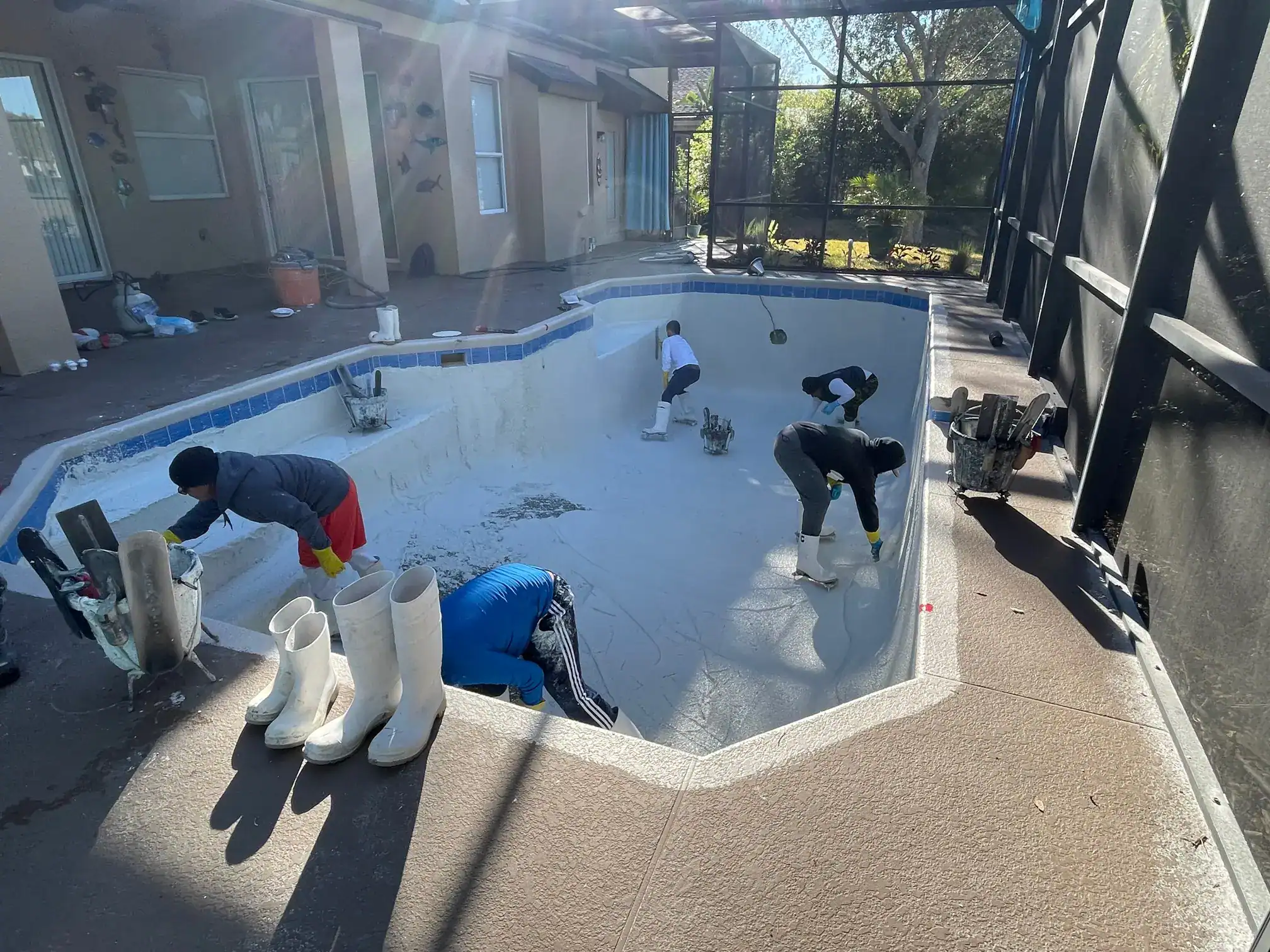
Yes. In many cases, a pool can be resurfaced without replacing the existing waterline tile or coping. If the tile and coping are firmly attached, structurally sound, and free from major deterioration, a contractor can usually leave them in place and replace only the interior pool finish.
The decision should be based on condition, not simply on the fact that the pool is being resurfaced. Loose tile, rocking coping, damaged grout, widespread cracking, or signs of water getting behind these materials may mean repairs or replacement should be handled before the new finish goes in.
At Sea Breeze Pools, we think the right resurfacing scope starts with an honest look at the pool edge, not just the interior finish. This guide shows you what can stay, what can be repaired, and what is smarter to coordinate.
Key takeaways
- You do not automatically need new tile or coping when resurfacing a pool.
- Existing tiles and coping can usually stay if they are firmly attached, stable, and in good condition.
- Loose tiles, rocking coping, failing grout, or significant cracking should be addressed before resurfacing.
- Small damaged areas can often be repaired without replacing the entire tile or coping line.
- If tile or coping is near the end of its useful life, replacing it during resurfacing may help you avoid another major project later.
- Resurfacing means draining the pool, so the contractor should plan the drain-down and water disposal in advance.
- Ask for the estimate in options so you can compare keeping, repairing, and replacing side by side.
Can you resurface a pool without replacing the tile?
Yes, if the existing tile is still in good condition. Waterline tile and the interior pool finish are separate parts of the pool. The old surface can be removed and a new plaster, quartz, or pebble finish installed while the tile stays in place.
Keeping the tile is usually reasonable when it is firmly bonded, the grout is intact, and there are no widespread cracks, missing sections, or signs of water getting behind it.

Why the tile needs a real inspection
A contractor should inspect the tile before resurfacing instead of judging it by appearance. Tile can look fine from the surface while still having loose or hollow areas underneath.
Can you resurface a pool without replacing the coping?
Yes. Coping can also stay if it is stable and in good condition. Coping sits along the top edge of the pool, above the interior finish. If the pieces are firmly set, the mortar joints are sound, and there is no major movement or cracking, the crew can generally work without removing it.
The biggest warning sign is movement. Coping that rocks, shifts, or feels loose underfoot should be evaluated before the pool is resurfaced.
Signs the tile or coping needs attention
Resurfacing is a good time to deal with problems around the pool edge, because the pool is already drained and work is already underway.
Signs the tile may need attention
Watch for the following:
- Loose, missing, or cracked tiles
- Crumbling or missing grout
- Several hollow or poorly bonded areas
- Persistent moisture or mineral deposits that suggest water is getting behind the tile
Signs the coping may need attention
Watch for the following:
- Coping stones that rock or move
- Cracked or deteriorated mortar joints
- Multiple loose coping sections
- Significant cracking along the top edge of the pool or around the tile and coping area
Loose coping is also a safety concern, because swimmers grip and stand on it constantly. Our guide to 7 signs your Orlando pool deck is becoming a safety problem covers other warning signs to watch for around the pool deck.
One damaged area does not mean replacing everything
A few isolated problems may be repairable. Widespread deterioration is a stronger reason to consider replacing the full tile band, coping, or both. If you are unsure whether cracking is cosmetic or something deeper, our guide to rough walls, stains, and cracks can help you tell the difference.
Can you repair only a few tiles or coping stones?
Often, yes. If the damage is limited to a few tiles or a small number of coping pieces, a contractor may be able to remove and reset only the affected areas before resurfacing.
The main challenge is matching older materials. Pool tile lines are sometimes discontinued, colors can vary between production batches, and natural stone changes with age and weather. A sound repair may still be slightly noticeable if an exact match is no longer available.
When does it make sense to replace tile or coping during resurfacing?
Replacement may make more sense when any of the following apply:
- Several areas are already loose, cracked, or deteriorated.
- The tile or coping is old enough that more failures are likely soon.
- There are signs of larger problems around the pool edge that need repair.
- You want to avoid draining the pool again for another renovation in a few years.
- You are making a major design update and the existing materials no longer fit the new look.
There can also be a practical advantage to combining the work. If tile or coping is likely to need replacement soon, doing it while the pool is already drained can avoid another round of setup, demolition, draining, refilling, and disruption later.
Where deck work fits in

Coping sits where the pool shell meets the deck. Resetting or replacing it can affect the adjoining deck edge, so a contractor may recommend looking at the deck at the same time.
If the deck is cracked, uneven, or not draining well, it can make sense to plan that work together with the pool edge. Our guide to pool remodel upgrades that add value covers deck material options along with tile and coping updates.
Resurfacing means draining the pool
Resurfacing requires draining the pool, so the drain-down should be planned instead of improvised. In Florida, high groundwater can push an empty pool upward, which is one reason homeowners should not drain an in-ground pool on their own. Your contractor should decide how and when to drain.
Where the water goes matters too. Storm drains are meant for stormwater, and Florida DEP’s pool draining guidance recommends letting chlorinated water stand at least 48 hours after the last chlorine addition, or until the chlorine residual is at or below 0.01 mg/L. It also recommends directing discharge over a vegetated surface. Local rules may add requirements, so ask your contractor who handles draining and disposal.
Will new pool plaster look strange with old tile or coping?

It can, but it does not have to. A fresh quartz or pebble finish can make faded tile, stained grout, or weathered coping stand out more than before.
On the other hand, clean and neutral tile or coping can look natural next to a new interior finish. There is no reason to replace good materials just because the pool is being resurfaced.
If you are moving from a basic white finish to a darker or more modern one, ask to see finish and tile samples together. That makes it easier to judge whether the existing materials will still look intentional once the work is done.
What should your pool contractor check before resurfacing?
Before deciding to keep the existing tile and coping, ask the contractor to confirm the following:
- Is the waterline tile firmly attached?
- Is the grout still in good condition?
- Is the coping stable and free from movement?
- Are there cracks that suggest a larger problem around the pool edge?
- Can isolated damaged areas be repaired instead of replacing everything?
- Is the existing tile and coping likely to last through the expected life of the new finish?
- Who plans the drain-down and handles disposal of the pool water?
The question about how long the existing materials will last matters most. You do not only want to know whether the old materials can survive the resurfacing job. You want to know whether keeping them is a sensible long-term decision.
You can also verify a contractor’s license through the Florida DBPR license search before you sign.
How to keep the scope and budget clear
A good estimate does more than give one total. It shows what is included and what is not. Ask the contractor to price the work in options so you can compare them side by side:
- Resurface only, keeping the existing tile and coping
- Resurface plus repairs to selected tiles, grout, or coping
- Resurface plus new waterline tile
- Resurface plus new tile and coping, with any related deck work
Keeping existing materials can lower the cost of this project. It may also raise the chance of a second project, with more draining and disruption, if those materials fail soon. A line-item estimate lets you make that trade-off with the full picture.
Our guide to pool resurfacing costs in Florida covers what to expect before you compare options.
Resurface only, repair, or replace?
A simple way to think about the decision is below.
| Option | Usually Makes Sense When |
| Keep existing tile and coping | They are secure, clean, structurally sound, and still fit the look you want. |
| Repair selected areas | Only a few tiles, grout joints, or coping pieces are damaged. |
| Replace tile, coping, or both | Damage is widespread, multiple areas are loose, significant cracking is present, or you want a full visual renovation. |
If you are weighing a bigger project, our guide on pool remodel vs. pool repair walks through that decision.
A note for Florida pool owners
Florida pools deal with strong sun, heavy rain, high humidity, and frequent wet-dry cycles. Those conditions can speed up wear around grout, coping joints, and other places where moisture can enter.
That does not mean Florida homeowners automatically need new tile or coping. It does make a careful inspection more valuable, especially on an older pool or one already showing cracks, loose materials, or repeated mineral buildup.
Frequently asked questions
Do I have to replace the pool tile when I resurface?
No. If the tile is firmly bonded, the grout is intact, and there is no sign of water getting behind it, it can usually stay. A contractor should inspect it first, since tile can look fine while being loose underneath.
Can loose coping stay when the pool is resurfaced?
It should not. Coping that rocks or shifts should be evaluated and secured or replaced before the new finish goes in.
Is it cheaper to replace tile and coping during resurfacing?
It depends on the condition of the pool. If tile or coping is likely to need replacement soon, doing it while the pool is already drained can avoid repeating draining, setup, and disruption later. If the existing materials are sound, there is no reason to replace them. Ask for options priced separately.
Can a contractor repair just a few tiles?
Often, yes. The main challenge is matching older tile, since lines get discontinued and colors vary between batches.
Will a new finish make my old tile look worse?
It can, especially with faded tile or stained grout. Ask to see finish and tile samples together before deciding.
Can I drain my own pool before resurfacing?
It is better not to. Florida’s high groundwater can push an empty pool upward, and pool water has disposal rules. Let your contractor plan the drain-down and water disposal.
Can your pool skip new tiles and coping? Find out with Sea Breeze Pools
You can usually resurface a pool without replacing the tile or coping if those materials are still in good condition. Resurfacing focuses on the interior finish, so sound tile and coping can often stay.
The decision changes when the tile is loose, grout is failing, coping moves, cracking is significant, or the materials are likely to need replacement soon anyway. In those cases, doing the extra work during resurfacing may be the better long-term choice.
You can see how our pool resurfacing process works, from the first assessment to the final walkthrough.
As a Central Florida pool repair and remodeling company, we can inspect the tile, coping, and surrounding pool edge before the pool is drained and explain what can stay, what can be repaired, and what should be replaced. Schedule a pool resurfacing inspection to get a clear scope and options before the work begins.