Pool problems rarely start as major failures. A small leak, unusual pump noise, loose tile, or growing crack can be the first sign that something needs attention. For Central Florida homeowners, heat, heavy rain, storms, year-round pool use, and changing groundwater conditions can add extra stress to both the pool structure and its equipment.
The most useful approach is simple: notice changes early, identify whether the issue looks minor or potentially serious, and bring in a qualified professional when the problem involves structural movement, electrical components, underground plumbing, significant water loss, or pool draining.
Key Takeaways
- Unexplained water loss, growing cracks, unusual equipment noises, persistent cloudy water, loose tile, and water around the equipment pad can all signal a repair problem.
- Central Florida pools can lose water to evaporation, but water loss that’s consistently greater than roughly 1/4 to 1/2 inch per day may deserve a closer look.
- Not every crack is structural. Fine surface crazing may be cosmetic, while growing cracks or cracks tied to water loss should be professionally evaluated.
- Pool equipment can often be repaired, but age, repair frequency, efficiency, parts availability, and repair cost all affect whether replacement makes more sense.
- Widespread finish problems may call for resurfacing rather than repeated patching. Multiple failing systems may point toward a broader renovation.
- Never drain an inground pool without professional guidance, especially when groundwater is high or after heavy rain or storms.
- Electrical, gas, structural, underground plumbing, and major leak repairs should be handled by qualified professionals.
- Permit requirements vary by project and local jurisdiction, so check with your city or county before major repair work begins.
How Do You Know Your Pool Needs Repair?
Start with what you can see, hear, or notice during normal use. The most important warning signs are changes that persist or get worse over time:
- Losing more water than usual
- Cracks that are growing, widening, or appear to extend beyond the surface finish
- Interior surfaces feel rough, flake, or show widespread deterioration
- Tile or coping that’s cracked, loose, or shifting
- Pump making grinding, screeching, or other unusual noises
- Equipment that repeatedly shuts off or trips a breaker
- Air bubbles that appear in the return lines
- Water collects around the pump, filter, valves, or equipment pad
- Water that stays cloudy even after normal cleaning and chemical balancing
A dirty filter, low water level, or worn seal can sometimes cause a relatively minor problem. But active water loss, a growing structural crack, or an electrical fault should be treated more urgently.
Is Your Pool Leaking or Is It Just Evaporation?

Some water loss is normal in Central Florida. Heat, sunshine, and air movement can cause roughly 1/4 to 1/2 inch of evaporation per day. If your pool is consistently dropping faster than that, a leak is more likely.
A bucket test can help you compare evaporation inside a bucket with water loss from the pool.
- Place a bucket of pool water on a pool step
- Mark the water level in the bucket and the pool
- Compare the drop after about 24 hours
If the pool level falls noticeably more than the bucket level, the pool may be leaking. We find that common leak areas include plumbing lines, skimmer connections, return fittings, underwater light niches, and cracks in the pool shell. Once a leak is suspected, a professional can use specialized testing to locate the source without unnecessary demolition.
Don’t ignore a leak once you suspect one. Escaping water can wash away or soften soil beneath the deck and around the pool, and over time, that can contribute to settling, deck cracking, or more serious structural movement. Fixing the source early is usually far better than repeatedly adding water and hoping the problem stays small.
What Pool Cracks Should Homeowners Worry About?
Not every crack means the pool structure is failing. The important distinction is whether the crack appears limited to the surface finish or extends into the concrete shell. Fine hairline cracks, sometimes called crazing, can occur in the plaster finish, and they may be unattractive, but they don’t automatically mean the pool shell is structurally damaged.
A crack deserves professional attention when it’s growing, runs continuously through the wall or floor, is associated with water loss, or appears alongside movement in the deck or surrounding structure. Homeowners don’t need to diagnose the exact cause themselves. The goal is to recognize when the issue has moved beyond a simple surface blemish.
Common Pool Equipment Problems
Mechanical problems are often easier to spot than structural issues because the equipment starts behaving differently. Watch for changes in sound, flow, temperature, or reliability. Pool pumps may show grinding or screeching noises, leaks around the pump housing, failure to start, repeated overheating or shutdowns, or weak circulation. Filters may leave water cloudy, let fine debris return to the pool, or show filter pressure that changes rapidly or stays unusually high. Heaters may fail to start, not reach the set temperature, or show repeated error messages or shutdowns.
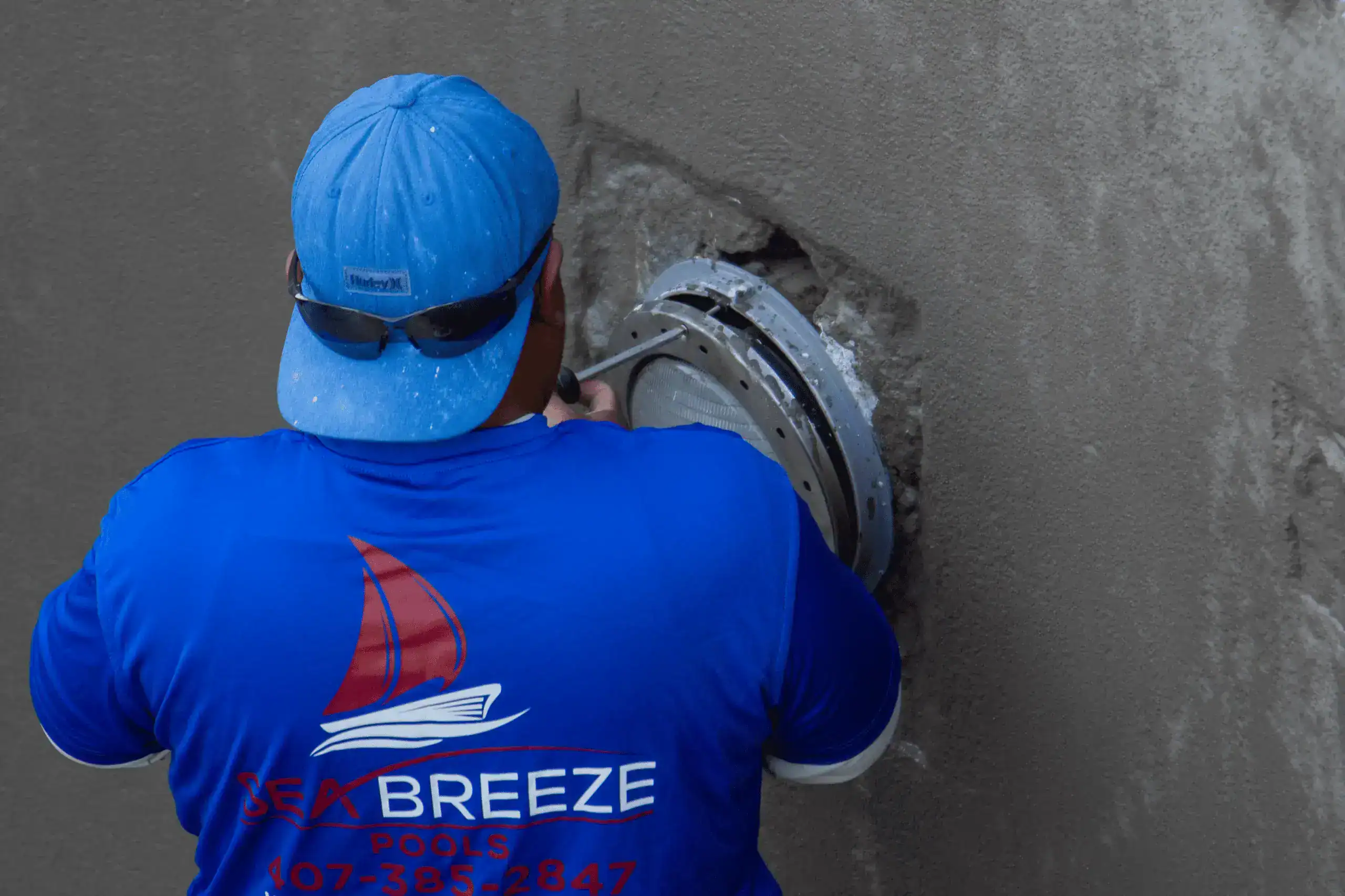
Salt systems, automation, and pool lights can also fail with age, weather exposure, electrical surges, or normal wear, and flickering lights, breaker trips, failed controls, or a salt system that no longer maintains chlorine are signs that the system should be checked.
Should You Repair or Replace Pool Equipment?

A failed part doesn’t always mean you need an entirely new system. Many pumps, filters, heaters, valves, and salt systems have serviceable components, and the decision becomes more about value when the equipment is older or has been repaired several times. Consider the equipment’s age, whether the same unit has needed repeated repairs, how the repair cost compares with replacement, whether replacement parts are still readily available, whether newer equipment would meaningfully improve energy efficiency, whether the equipment is still under warranty, and how much useful life is realistically left. We break down typical Florida equipment lifespans by component in our pool equipment lifespan guide, which can help you gauge where a given part sits before deciding.
Pool Repair vs. Resurfacing vs. Renovation
These services solve different levels of problems, and choosing the right scope can prevent both overspending and repeated short-term fixes.
| Option | Best for | Common examples |
| Repair | One isolated problem | A leaking seal, localized leak, loose tile, or a single equipment failure |
| Resurfacing | Widespread interior finish deterioration | Rough finish, broad delamination, exposed aggregate, or recurring surface problems |
| Renovation | Several systems or finishes failing together | Aging equipment, deteriorated plaster, damaged decking, old plumbing, or multiple recurring issues |
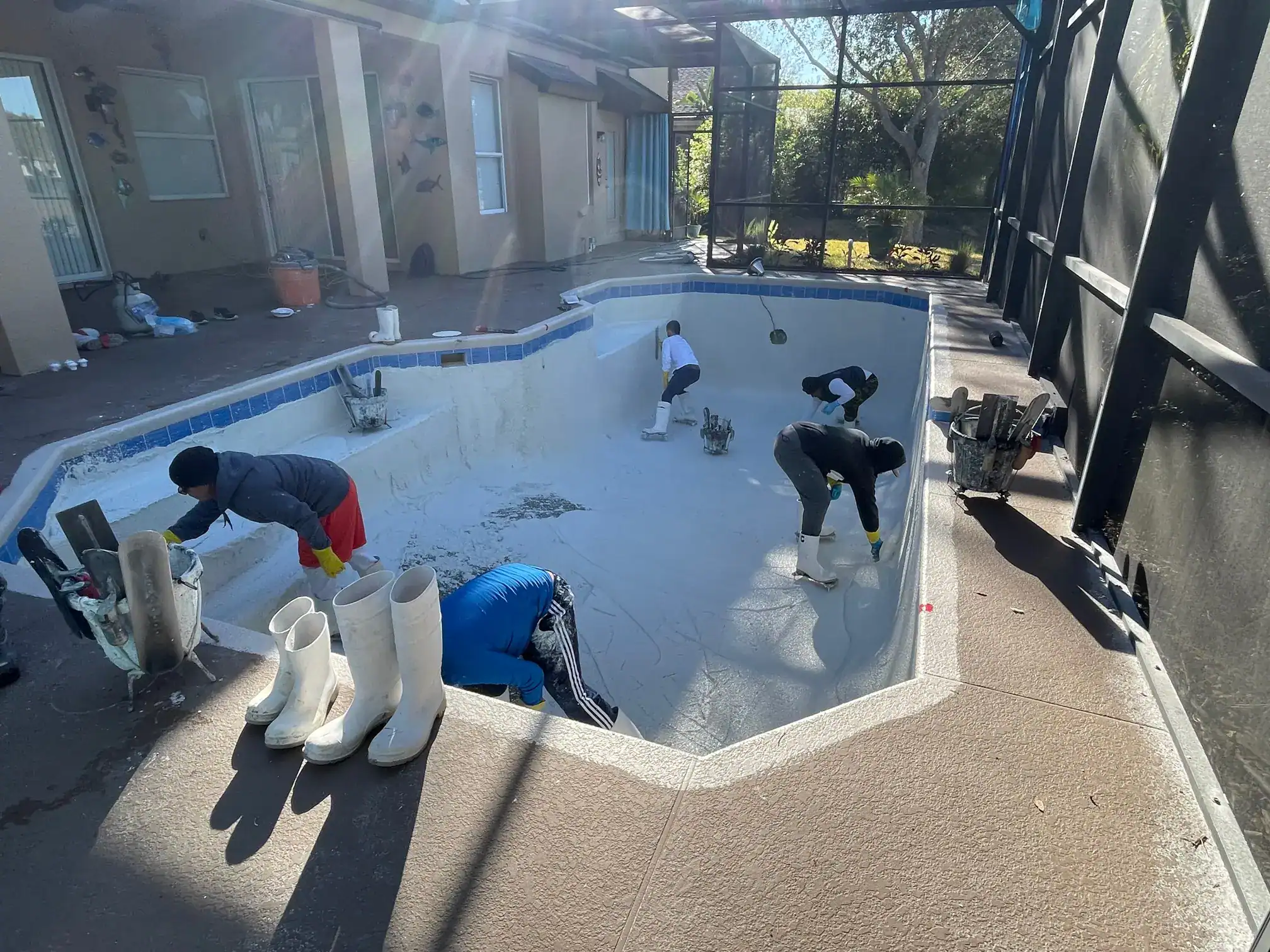
A practical rule of thumb is to look at the pattern. If one component is failing and the rest of the pool is in good condition, a targeted repair may be enough. If the finish is deteriorating across large areas, resurfacing may make more sense, and our guide on the hidden costs of waiting too long to resurface a pool goes deeper into exactly when that decision point arrives. If several major parts of the pool are aging or failing at the same time, our full comparison of repairing versus renovating a pool walks through that bigger decision in detail.
Why Central Florida Pools Develop Repair Problems
Central Florida’s climate matters because pools operate year-round and are exposed to conditions that can accelerate wear. Strong sun and UV exposure can degrade exposed plastic and PVC components over time, high water temperatures can increase chlorine demand and make water balance harder to maintain, heavy rain can dilute pool chemistry and introduce debris and contaminants, wet and dry soil cycles can contribute to movement around the pool and deck, and high seasonal groundwater can create upward pressure against an inground pool shell.
These conditions don’t mean every Central Florida pool will develop structural problems. They simply make early inspection and consistent maintenance more important.
Pool Repairs After Hurricanes and Severe Storms
Storm damage can affect the pool even when the shell looks intact. Debris can clog the system, floodwater can contaminate the pool, and electrical equipment can be damaged by water or power surges. Remove large debris before running pool equipment, and if electrical equipment was submerged or flooded, keep the power off until it’s been inspected. Expect water chemistry to need correction after heavy rain or contamination, and don’t drain an inground pool before or after a storm without professional guidance.
That last point is especially important in Florida. When groundwater is high, an empty pool can be pushed upward by hydrostatic pressure, damaging the shell, plumbing, and deck. The water inside the pool provides weight that helps counter that upward pressure.
What Pool Repairs Can You Handle Yourself?
Homeowners can safely handle routine maintenance and basic visual checks. The line should be drawn where the work introduces electrical, gas, structural, underground plumbing, or major pressure-related risk. Reasonable homeowner maintenance includes cleaning skimmer and pump baskets, testing and balancing pool water, cleaning or rinsing filter elements as recommended, brushing and vacuuming the pool, and checking for visible leaks, cracks, loose tile, or unusual equipment behavior.
Call a professional for electrical or underwater lighting problems, gas heater repairs, underground plumbing leaks, structural cracks, major or hard-to-locate leaks, pool draining, and significant equipment disassembly or replacement. If a breaker trips when a pool light or pump turns on, leave the affected circuit off and have the issue inspected. Electrical problems around water should never be treated as a trial-and-error DIY repair.
Do Pool Repairs Require Permits in Central Florida?
Sometimes. Minor maintenance such as cleaning baskets or replacing simple consumable items typically doesn’t require a permit. Larger repairs may require building, plumbing, electrical, or mechanical permits depending on the scope of work and the local jurisdiction, including pump or heater replacement, electrical work, structural shell repairs, underground plumbing replacement, deck or safety-barrier alterations, and some resurfacing or renovation projects.
Requirements can differ between Orange County, Seminole County, Osceola County, the City of Orlando, and other Central Florida jurisdictions. Before major work begins, confirm the requirements with the local building department and ask the contractor who will be responsible for pulling any required permits.
How to Choose a Pool Repair Contractor
A good repair starts with the right diagnosis. Before approving major work, make sure the contractor can clearly explain what failed, why it failed, and what the proposed repair will solve. Verify the appropriate active Florida contractor license for the work being performed, confirm liability insurance and, when applicable, workers’ compensation coverage, and ask whether the company regularly handles the specific repair you need. Request a written estimate that explains the repair scope, parts, labor, and warranty, ask whether permits are required and who will obtain them, and ask whether subcontractors will be used for electrical, plumbing, or other specialty work.
Be cautious of a contractor who recommends a large repair without explaining how the problem was diagnosed.
How to Prevent Expensive Pool Repairs
You can’t prevent every failure, but routine attention can catch many problems before they become expensive. Keep water chemistry properly balanced to protect surfaces and equipment, keep skimmer baskets, pump baskets, and filters clean so circulation stays strong, and watch the water level for unexplained changes. Pay attention to new noises, leaks, error messages, or breaker trips, look for changes in the pool finish, tile, coping, and deck, and address small recurring problems instead of repeatedly working around them.
Frequently Asked Questions
How much water loss is normal for a Central Florida pool?
Roughly 1/8 to 1/4 inch of daily water loss can occur from evaporation under Central Florida conditions. If your pool consistently loses more than that, especially without an obvious weather explanation, investigate for a possible leak.
How can I tell if my pool has a leak?
Look for faster-than-normal water loss, damp or soggy areas near the pool, persistent air in the circulation system, or unusual water bills. A bucket test is a useful first check before professional leak detection.
Can a cracked pool be repaired?
Yes, but the right repair depends on the crack. Fine surface cracks may only affect the finish. Growing cracks, cracks linked to water loss, or cracks that appear to extend through the shell should be professionally evaluated.
Is it better to repair or replace an old pool pump?
It depends on the pump age, the type of failure, repair history, efficiency, parts availability, warranty, and the cost difference between repair and replacement. A minor failure on a newer unit may be worth repairing; repeated failures on an aging unit may point toward replacement.
Do pool repairs require permits in Florida?
Some do. Minor maintenance generally doesn’t, while equipment replacement, electrical work, structural repairs, underground plumbing, and other major work may require permits. Local requirements vary, so verify with your city or county.
Can hurricanes damage pool equipment?
Yes. Flooding, debris, electrical surges, and contaminated stormwater can damage pumps, controls, heaters, and filtration systems. Submerged electrical equipment should be inspected before power is restored.
Getting a Clear Diagnosis for Your Central Florida Pool Repair With Sea Breeze
The best time to deal with a pool problem is when it’s still small. A little water loss, a new equipment noise, or an isolated surface defect may be manageable now but more expensive later if the underlying cause continues. If the issue involves structural damage, electricity, underground plumbing, major water loss, or pool draining, get a qualified professional involved before the problem grows.
As a Central Florida pool repair and remodeling company, we can tell you honestly whether you’re looking at a targeted repair, resurfacing, or a larger renovation before a minor problem becomes a major one. Schedule a pool inspection to get a clear diagnosis before deciding what to do next.