Does a pool remodel increase home value? Often, yes, but usually not by matching what you actually spend, and the biggest gains come from the least flashy improvements. Homeowners tend to get the most practical value from upgrades that make an aging pool look well maintained, reduce operating costs, improve safety, and remove concerns a future buyer may have about expensive repairs.
That usually means prioritizing resurfacing, tile and coping, decking, efficient equipment, lighting, and practical automation before spending heavily on major structural changes or highly customized luxury features.
Key Takeaways
- Resurfacing, updated tile and coping, improved decking, and efficient equipment usually offer stronger practical value than highly customized luxury additions.
- Fix leaks, structural problems, unsafe surfaces, failing equipment, and electrical or barrier issues before adding cosmetic features.
- A variable-speed pump, LED lighting, and simple automation can make an older pool feel more modern while helping reduce ongoing ownership costs.
- Buyer appeal depends on the local market. Pool upgrades tend to matter more in warm climates and neighborhoods where pools are common.
- Don’t expect a pool remodel to add its full cost to the home’s appraised value. Appraisers look at comparable sales and local buyer demand.
- If you may sell soon, broad-appeal improvements are usually a safer choice than expensive spas, grottos, waterfalls, or major pool reshaping.
Which Pool Remodel Upgrades Add the Most Value?
A pool that looks worn, cracked, stained, or mechanically outdated can feel like a future expense to a buyer. A remodel has the most value when it removes that concern. If the pool is already in good condition, the next best improvements are typically the ones that make it easier and less expensive to own.
A neutral, clean, easy-to-maintain pool will usually appeal to more buyers than a highly personalized one. The goal isn’t to make every possible upgrade. It’s to bring the pool up to a level that fits the home, the neighborhood, and what buyers in that market expect.
1. Resurface a Worn or Dated Pool
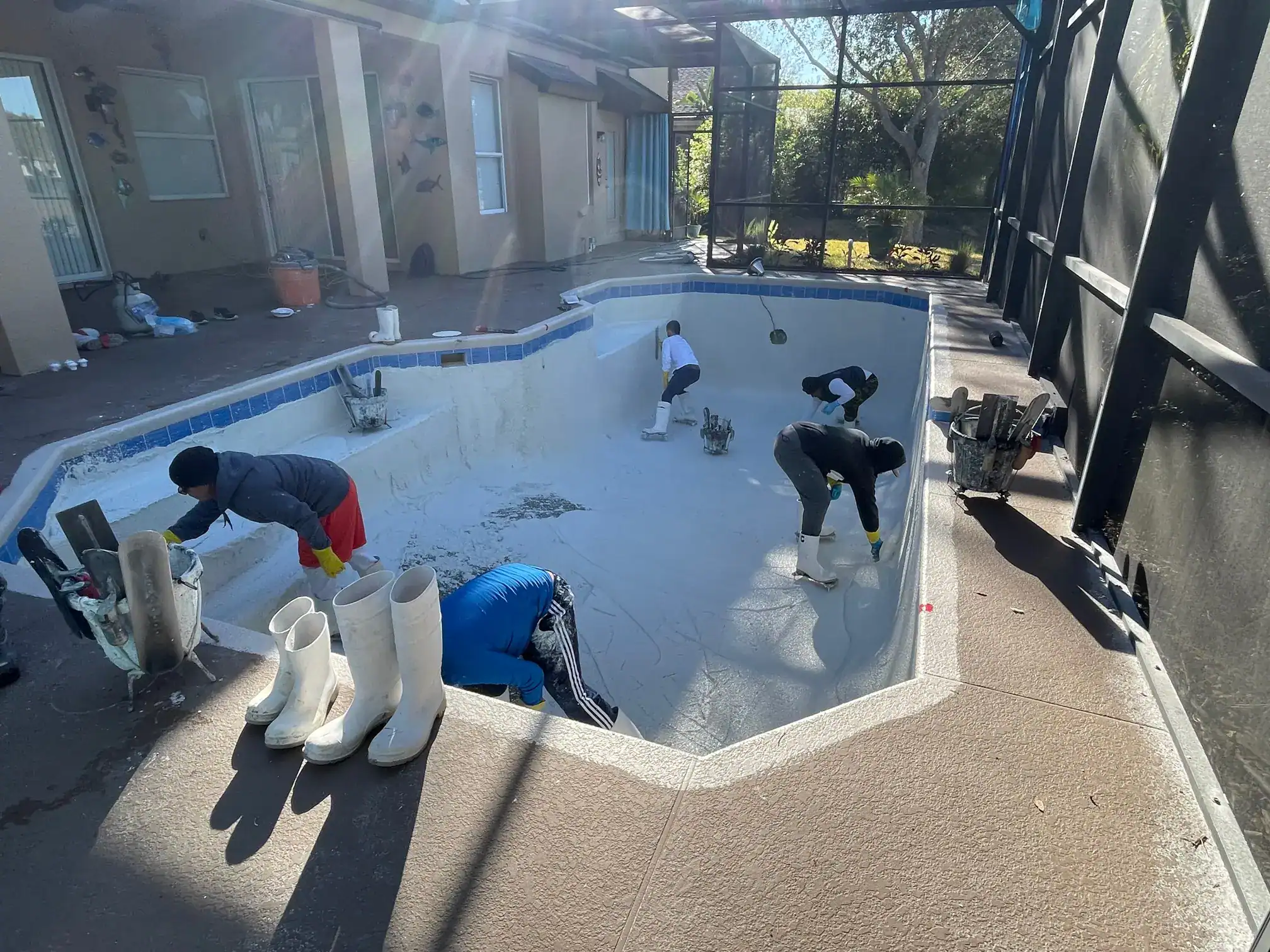
If the pool surface is rough, stained, peeling, cracked, or visibly dated, resurfacing should be near the top of the list. It improves appearance immediately and can remove one of the biggest objections a buyer has: the fear of needing a major pool repair soon after moving in.
Quartz and pebble finishes typically cost more than basic plaster, but they also tend to last longer and give the pool a more updated appearance. Neutral blue, teal, and light gray tones are generally safer choices for resale than very dark or highly customized finishes. If the surface is still in good condition, however, resurfacing purely for resale may not be necessary. Spend where the pool actually needs attention, and our full guide to Sarasota resurfacing costs and options covers what to expect before committing to a finish.
2. Update Waterline Tile and Coping

We find that old tile and coping can make an otherwise functional pool look decades older. Cracked, missing, stained, or heavily dated tile also suggests deferred maintenance.
Updating the waterline tile and coping can provide a noticeable visual refresh without rebuilding the pool. Neutral porcelain, glass, stone, and other timeless finishes usually have broader appeal than bold mosaics or very personal designs. If you already plan to resurface the pool, it can make sense to handle tile and coping at the same time because the work overlaps and the finished result looks more cohesive.
3. Improve the Pool Deck
The pool deck is a major part of how buyers experience the backyard. Cracked, uneven, stained, or slippery decking can make the entire area feel neglected even if the pool itself is in good condition.
A good deck upgrade should improve both appearance and everyday use. Look for materials that stay reasonably comfortable underfoot, provide traction when wet, hold up well outdoors, and fit the style of the home. Pavers, travertine, exterior porcelain, resurfaced concrete, and other options can all work depending on climate and budget. More important than choosing the most expensive material is creating a clean, safe, usable area for lounging, dining, and entertaining.
4. Replace an Old Single-Speed Pump
For operating-cost savings, a variable-speed pump is one of the most practical upgrades available. Older single-speed pumps run at full power whenever they’re on, while variable-speed models can run at lower speeds for routine filtration and increase speed only when needed.
That can reduce electricity use significantly, while also making the equipment quieter. It may not create the same visual impact as new tile or decking, but it addresses a concern many buyers have about pool ownership: monthly utility costs.
5. Add LED Pool Lighting
LED lighting is a relatively simple way to make an older pool feel more current. Modern LED fixtures use far less electricity than older incandescent lights, last longer, and can improve nighttime visibility around steps, benches, and deeper areas.
White lighting offers a clean, classic look, while color-changing systems can add more atmosphere for entertaining. The best choice for resale is usually a system that looks polished and is easy to operate rather than one built around elaborate light shows.
6. Use Practical Pool Automation
Smart controls can make pumps, heaters, lights, and other equipment easier to manage from a phone or central controller. The main value is convenience and better scheduling, not technology for its own sake.
For example, automation can help run a variable-speed pump efficiently or turn heating on only when needed instead of keeping equipment running unnecessarily. If you add automation, choose a simple, established system a future homeowner can understand without a complicated handoff.
7. Consider a Saltwater System for Easier Maintenance
A saltwater pool still uses chlorine, but the system generates it automatically rather than relying entirely on manual chlorine dosing. Many buyers recognize saltwater as a convenience upgrade because it can reduce routine chemical handling and maintain more consistent sanitation.
It’s not maintenance-free. The salt cell still requires cleaning and eventual replacement, and some pool materials need extra protection from salt exposure. Treat saltwater as a convenience upgrade, not a guaranteed home-value booster.
8. Upgrade Heating When It Extends Real Pool Use
Heating adds the most value when it meaningfully extends the swimming season. In warmer climates, an efficient heat pump can be a practical choice for regular seasonal use. Gas heaters heat water faster and can make more sense for spas or occasional heating.
The right system depends on climate, utility costs, pool size, and how the pool is used. A heater is more valuable when it makes the pool genuinely more usable rather than simply adding another piece of equipment.
What About Spas, Baja Shelves, and Water Features?
A Baja shelf or tanning ledge can make an older pool feel more current and give swimmers a shallow area for lounging, young children, pets, or in-water seating. In warm, family-oriented markets, that can be attractive, but it also takes up swimming space, so it’s not automatically a good fit for a smaller pool.
An integrated spa can make a backyard more desirable, especially in neighborhoods where attached spas are common. But adding one to an existing pool is a major construction project and may cost tens of thousands of dollars, and it can improve buyer appeal without returning the full installation cost at resale.
Bubblers, deck jets, and clean water walls can add visual interest. Large rock waterfalls, grottos, and other highly customized features cost more, require more maintenance, and may appeal to a smaller group of buyers. If resale matters, simple features are usually safer.
Pool Upgrades That Often Don’t Pay Off

The biggest risk in a value-focused remodel is over-improving the pool. Expensive doesn’t automatically mean valuable. We believe homeowners should be cautious with major changes:
- Pool’s shape or depth
- Custom grottos, rock caves, and swim-up bars
- Highly personalized mosaics or specialty finishes
- Large water features that increase maintenance
- Luxury upgrades that are far above the standard of nearby homes.
Changing the shape or depth of an existing concrete pool can involve extensive demolition and structural work. In many cases, updating the existing shell with a fresh surface, tile, coping, decking, and equipment creates a much stronger transformation for the money. If you’re weighing a full reshape against a surface-level refresh, our guide on repairing versus renovating a pool walks through that exact decision.
What Should You Fix Before Spending on Cosmetic Upgrades?
Before choosing finishes or features, make sure the pool doesn’t have problems that could undermine the remodel. Prioritize:
- Active leaks or structural cracks
- Failing pumps, filters, heaters, or plumbing
- Damaged or deteriorated pool surfaces
- Unsafe, cracked, or slippery decking
- Outdated electrical protection, lighting, drains, barriers, or gates.
Safety and permit requirements vary by location, especially when a remodel changes electrical systems, plumbing, gas lines, pool structure, decks, or barriers. A licensed pool contractor should verify what applies before work begins.
Does a Pool Remodel Really Increase Home Value?
It can, but rarely dollar for dollar, and this is consistent with what real national research on home improvements shows more broadly. The National Association of Realtors’ Remodeling Impact Report on outdoor features found that homeowners nationally recover roughly 56% of typical outdoor pool project costs at resale, and Zillow’s own research found homes with pools sell for roughly 1.5% more nationally than comparable homes without one. Neither figure is Central Florida-specific, and appraisers generally look at comparable sales rather than simply adding your remodel’s cost to the home’s value, so a $30,000 remodel does not automatically create $30,000 in appraised value.
If you expect to sell in the next few years, focus first on defects a buyer can see or expenses a buyer can anticipate. Resurfacing a deteriorated interior, repairing unsafe decking, modernizing equipment, and refreshing tile and coping can make the pool feel cared for without turning the project into a complete rebuild.
Before spending heavily, compare the property with similar homes nearby. If pools are common in the neighborhood, keeping yours modern and functional may help the home remain competitive. If pools are uncommon, a large luxury remodel may not be rewarded by the market.
A Simple Priority Order for a Value-Focused Pool Remodel
For most homeowners, this order keeps the project focused on practical value:
- Repair leaks, structural problems, and safety issues
- Resurface if the existing finish is visibly worn or failing
- Refresh tile, coping, and damaged decking
- Replace inefficient or failing equipment
- Add LED lighting and straightforward automation (if the budget allows)
- Consider saltwater, heating, a Baja shelf, or other lifestyle upgrades (if they fit the home and market)
- Leave highly customized luxury additions for personal enjoyment, not expected resale return
Frequently Asked Questions
Does a pool remodel increase home value?
Often, yes, but usually not by the full amount spent. National research shows homeowners typically recover roughly half of an outdoor pool project’s cost at resale, so remodel for broad appeal and everyday enjoyment rather than expecting a dollar-for-dollar return.
Which pool remodel upgrade adds the most value?
For most pools, resurfacing a worn or damaged surface provides the strongest combination of visual improvement and buyer reassurance, especially when paired with updated tile, coping, and efficient equipment.
Should I add a spa or waterfall before selling?
Usually not for resale purposes alone. These are major, expensive additions that improve lifestyle appeal but rarely return their full installation cost, and they may appeal to a narrower group of buyers.
What should I fix before making cosmetic upgrades?
Address active leaks, structural cracks, failing equipment, unsafe decking, and outdated electrical or safety barriers first. Cosmetic improvements on top of unresolved problems don’t protect the investment.
Is a variable-speed pump worth it for resale?
It can be, since it reduces the ongoing electricity costs many buyers ask about, even though it doesn’t create the same visual impact as new tile or decking.
Choosing the Right Pool Remodel Upgrades With Sea Breeze Pools
The best pool remodel upgrades for increasing home value are the ones that make the pool look well maintained, feel safe, cost less to operate, and fit naturally with the home and neighborhood. For many pools, that means resurfacing, updated tile and coping, better decking, a variable-speed pump, modern lighting, and simple controls before adding expensive luxury features.
If resale is part of the goal, remodel for broad appeal. Fix what’s wrong, modernize what looks dated, reduce future ownership concerns, and avoid spending heavily on features that buyers may not value as much as you do. As a Central Florida pool repair and remodeling company, we can help identify which upgrades actually make sense for your pool, budget, and local market. Schedule a pool evaluation and start with the improvements that matter most.