Pool resurfacing cost in Central Florida typically runs $4,000 to $10,000 for a standard residential pool. Larger pools, premium finishes, difficult access, or significant surface damage can push the price to $15,000 or more, and if the project also includes new waterline tile, coping, deck work, or equipment upgrades, the total may range from $10,000 to $22,000.
The only way to determine the exact cost of resurfacing a pool is to have it inspected. Size matters, but the existing surface condition and chosen finish can have an even greater effect on the final quote.
Key Takeaways
- Most standard pool resurfacing projects in Central Florida cost $4,000 to $10,000.
- Premium finishes or extensive repairs can raise the price above $15,000.
- Standard plaster costs less upfront, while quartz and pebble finishes usually last longer.
- Pool size, depth, design, surface condition, and backyard access all influence pricing.
- Tile, coping, leak, deck, and structural repairs are usually additional expenses.
- A written estimate should identify the finish, preparation work, startup service, and warranties.
- Most projects require several working days, followed by refilling and a controlled chemical startup.
Average Pool Resurfacing Cost in Central Florida
The following ranges can help you build an initial budget.
| Project type | Typical cost range |
| Basic plaster resurfacing | $4,000 to $7,000 |
| Quartz or pebble resurfacing | $5,000 to $10,000+ |
| Large pool or extensive surface repairs | $10,000 to $15,000+ |
| Resurfacing with tile, coping, or deck upgrades | $10,000 to $22,000 |
These are general planning ranges rather than guaranteed prices. Two pools with similar dimensions can receive very different estimates if one needs only routine preparation and the other has cracks, hollow areas, or failing plaster. Some problems also remain hidden until the pool is drained, so a contractor should explain how unexpected repairs will be documented and priced before any additional work begins.
How Finish Selection Affects the Cost

Your chosen pool finish has a major effect on the upfront price, appearance, maintenance requirements, and expected lifespan.
White Plaster
Often called marcite, this is generally the least expensive option, creating a smooth surface and the traditional light-blue appearance many homeowners prefer. A properly maintained plaster finish may last approximately 7 to 12 years, though it’s more vulnerable to staining, roughness, and damage from unbalanced water chemistry than upgraded finishes.
Plaster tends to make sense when keeping the initial cost low is the main priority, you prefer a classic pool appearance, or you’re comfortable with more frequent resurfacing over the pool’s lifetime.
Quartz
Quartz finishes cost more than standard plaster but offer better resistance to staining and everyday wear, available in several colors and textures without feeling as rough as some exposed aggregate surfaces. A quartz finish may last approximately 10 to 15 years with proper care, and it’s a good fit when you want a balance between price and durability, more color options than standard white plaster provides, or better stain resistance without moving to the highest price level.
Pebble
Pebble aggregate finishes have a higher upfront cost but rank among the most durable residential options, creating a natural, textured appearance that may last 15 to 20 years or longer when installed and maintained correctly. Some homeowners love the texture, while others prefer a smoother surface, so it’s worth seeing and feeling an installed sample before choosing.
Pebble makes the most sense when long-term durability matters more than the lowest initial price, you want a natural or lagoon-style appearance, or you prefer a finish highly resistant to staining and chemical damage.
| Finish | Relative cost | Approximate lifespan | Surface |
| White plaster | Lowest | 7 to 12 years | Smooth and traditional |
| Quartz | Mid-range | 10 to 15 years | Smooth to moderately textured |
| Pebble | Higher | 15 to 20+ years | Natural and textured |
These lifespans are estimates. Installation quality, pool usage, water chemistry, and maintenance will determine how long any finish actually lasts.
What Determines the Final Resurfacing Price?
Every pool is different. So the price will be too. Here are the factors that will determine your final price:
Size
Pool size is important, but contractors weigh several other factors when preparing an estimate. A larger or deeper pool requires more material and labor, and contractors should calculate the pool’s complete interior surface area rather than relying only on length and width.
Shape
Shape and design matter too, since freeform pools and designs with tight curves require more detailed handwork than basic rectangular pools, and features like attached spas, steps and benches, sun shelves, swim-outs, raised walls, and complex corners or curves can all increase labor.
Current Condition
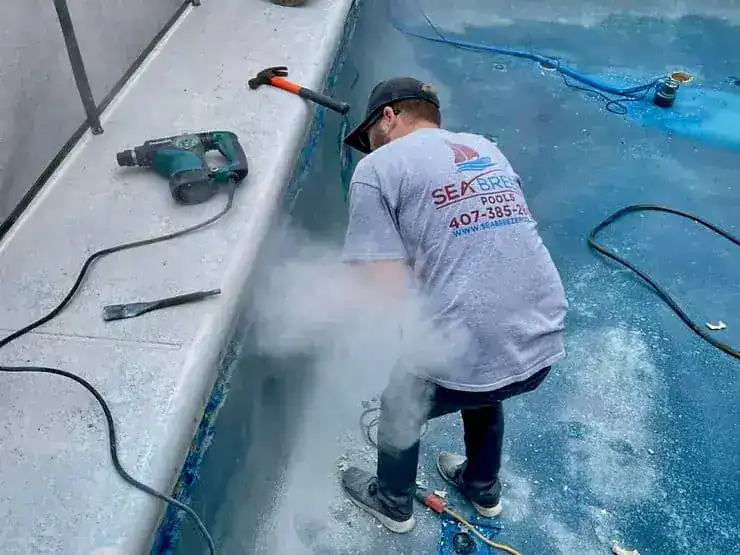
Existing surface condition plays a major role as well, since the new finish must go over a properly prepared surface, and if the old plaster is separating from the concrete shell, the failing material may need removal first.
Additional repairs may surface if the contractor finds structural cracks, hollow or loose plaster, exposed concrete, rust stains from corroded metal, previous patches that are failing, or leaks around the skimmer, drains, or fittings. Structural crack repairs can add approximately $1,000 to $3,000 or more depending on their extent, so ask whether the estimate includes a repair allowance or whether all repairs get priced separately.
Accessability
Backyard access matters too, since narrow gates, screen enclosures, landscaping, and limited equipment access can increase labor costs when a crew has to carry materials and debris by hand. Weather and seasonal demand play a role as well.
Weather
Central Florida’s frequent summer storms can interrupt surface preparation and finish application, and late fall or winter may offer more predictable scheduling, though availability and pricing still depend on the contractor.
Additional Costs to Include in Your Budget
Resurfacing replaces the pool’s interior finish, but it doesn’t automatically include every repair or upgrade around the pool. Possible additional expenses include:
- Crack or shell repairs
- Leak detection
- Removal of extensive failing plaster
- Waterline tile replacement
- Coping repair or replacement
- Skimmer repairs
- Deck resurfacing
- Pool draining and refilling
- Chemical startup
- Permit or administrative fees
- Light, pump, or automation upgrades
Replacing tile or coping while the pool is already empty may reduce duplicated setup and labor, but these improvements should still appear as separate line items in the estimate so you can see what each part of the project actually costs. Avoid comparing estimates based only on the total at the bottom, since one quote may include preparation, startup, and minor repairs while another leaves them out entirely.
What Should a Pool Resurfacing Estimate Include?
A professional estimate should clearly describe the scope of work, including:
- Draining the pool safely
- Inspecting the existing finish and concrete shell
- Preparing or removing the old surface
- Repairing identified cracks or hollow areas
- Applying the required bond coat
- Naming the finish manufacturer, product, and color
- Supplying and installing the new finish
- Providing refill and startup instructions
- Balancing the initial water chemistry
- Removing debris and cleaning the work area
- Explaining workmanship and material warranties
Ask how hidden damage will be handled, since the contractor should get your approval before completing repairs that substantially increase the agreed price.
How Long Does Pool Resurfacing Take?
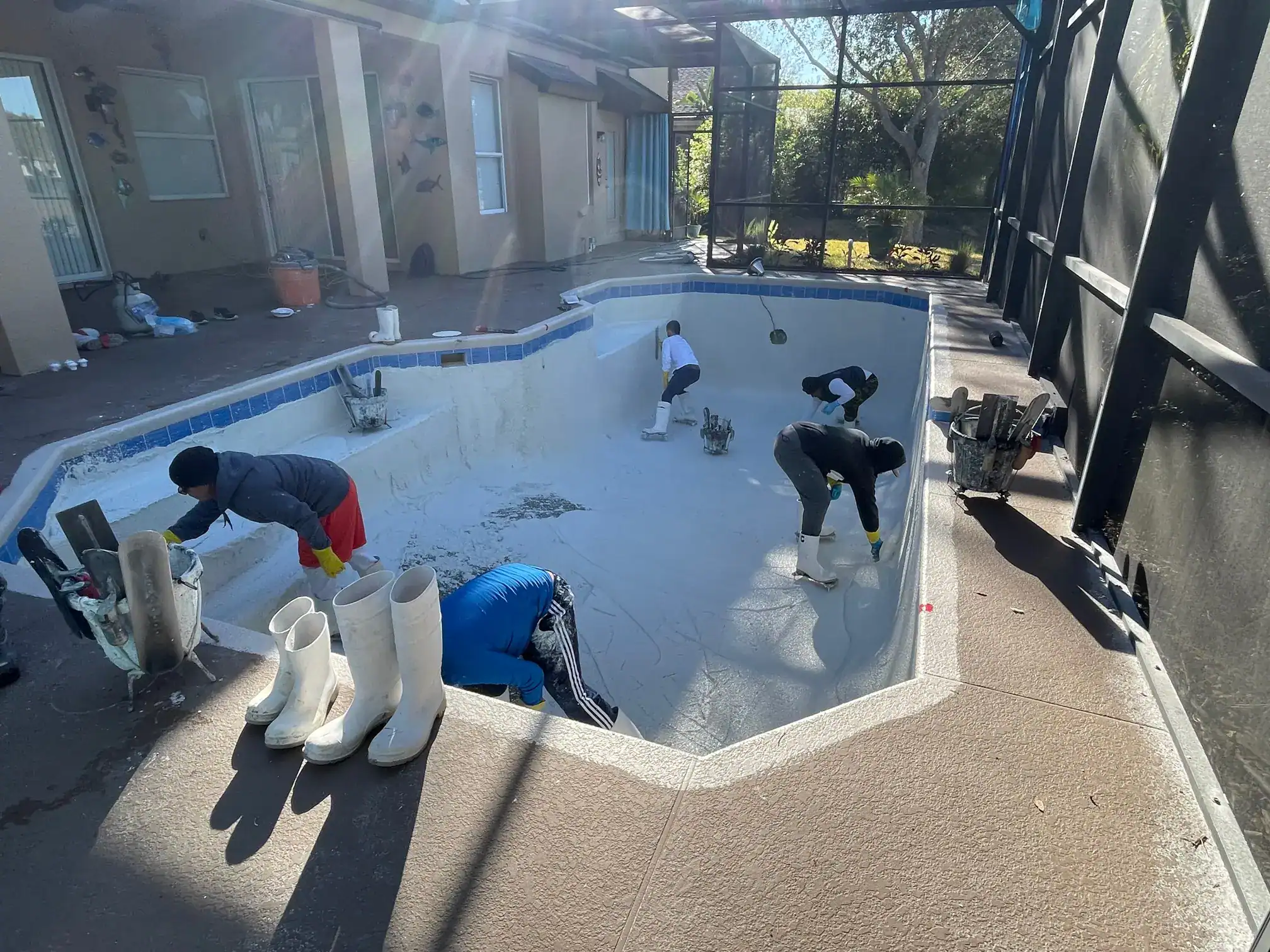
The physical work commonly takes several working days, but the complete process can run longer. A typical project involves draining the pool, preparing the existing surface, completing necessary repairs, applying the new finish, refilling the pool, and starting and balancing the water chemistry. Surface preparation and repairs often take two to four days, applying the finish may take another one or two days, followed by one or two days for refilling, and rain or unexpected damage can extend the schedule further.
You may need to wait about one week before swimming, depending on the finish manufacturer and startup method, and the new surface will also require careful brushing and water testing during its first 30 days. Follow the contractor’s instructions closely, since incorrect startup chemistry can cause staining, scaling, or permanent discoloration.
Are Permits Required for Pool Resurfacing?
Permit requirements depend on the municipality and the work being performed. A basic cosmetic resurfacing project may be treated differently from a renovation involving structural shell repairs, plumbing modifications, electrical work, pool light replacement, equipment relocation, or major tile, coping, or deck changes. Some Florida projects may also require a recorded Notice of Commencement based on the contract value and scope.
Your contractor should identify which permits or documents apply before work begins, and homeowners should also check for HOA approval requirements. Don’t assume a project is exempt simply because it’s described as resurfacing.
When Does a Pool Need Resurfacing?
A stained pool doesn’t always need a new finish, since some discoloration may respond to cleaning or water-chemistry correction. Resurfacing becomes more likely when you notice a rough or abrasive surface, pitting, flaking, or peeling, plaster that leaves a chalky residue, persistent stains that don’t respond to treatment, gray concrete showing through the finish, cracks or repeatedly failing patches, or unexplained water loss combined with visible surface damage.
A professional inspection can help determine whether you need resurfacing, a localized repair, leak detection, or a more complete pool renovation. If the pool is losing water, have the leak investigated before installing a new finish, since resurfacing won’t correct every plumbing or structural leak.
How to Keep Pool Resurfacing Costs Under Control
The lowest estimate is not always the least expensive option over time, since skipping proper preparation can cause the new finish to separate or fail prematurely. To control costs without sacrificing quality, get multiple detailed estimates based on the same finish, compare preparation methods and warranties rather than just totals, repair surface problems before they become major structural issues, ask whether necessary tile or coping work can be completed during the same project, consider scheduling during a less busy season, select a finish based on expected lifespan as well as upfront price, and keep the water properly balanced after resurfacing.
Be cautious when a quote comes in significantly below other local estimates, since it may exclude essential preparation, repair work, startup service, permits, or warranty coverage.
How to Choose a Pool Resurfacing Contractor
Florida pool repair and resurfacing work should be performed by an appropriately licensed and insured contractor. Before signing an agreement, ask for their Florida contractor license number, confirm they carry liability and workers’ compensation insurance, and ask how they’ll prepare the existing pool surface, which finish manufacturer and product they’ll use, how hidden repairs are documented and priced, who handles permits and required paperwork, who is responsible for draining, refilling, and startup, what workmanship and manufacturer warranties are included, and whether they can provide examples of recent Central Florida projects.
Avoid estimates that use vague descriptions like “standard finish” without identifying the actual product. You should know exactly what’s being installed and what the warranty covers.
Frequently Asked Questions
Is pool resurfacing cheaper than pool renovation?
Yes. Resurfacing focuses on replacing the interior finish, while a pool renovation may also include tile, coping, decking, equipment, lighting, or design changes, which can increase the total to $10,000 to $22,000 or more.
Can a pool be resurfaced without draining it?
No. The water must be removed so the old surface can be prepared, damage can be inspected, and the new finish can be installed. Because Central Florida can have a high water table, homeowners should never drain an inground pool themselves, since improper draining can place pressure on the empty shell and potentially cause serious damage.
What is the least expensive pool finish?
Standard white plaster is generally the most affordable finish. Its lower upfront price comes with a shorter expected lifespan than quartz or pebble.
Which finish provides the best value?
Quartz is often a practical middle option, costing less than many pebble finishes while offering greater durability than standard plaster. Pebble may provide better long-term value for homeowners comfortable with the higher upfront price and textured surface.
Can I swim as soon as the pool is refilled?
Usually not. The required waiting period depends on the finish and startup process, so follow the contractor and manufacturer’s instructions before entering the pool.
Can the price increase after resurfacing begins?
Yes. Cracks, hollow plaster, corroded metal, or shell damage may become visible only after the pool is drained. A reputable contractor should explain the problem, provide a price, and get your approval before completing any additional work.
Getting an Accurate Pool Resurfacing Estimate From Sea Breeze Pools
Most Central Florida homeowners should initially budget $4,000 to $10,000 for pool resurfacing, though your actual price will depend on the pool’s size, current condition, selected finish, access, and any repairs or upgrades included. The only way to move from a planning range to a real number is a hands-on inspection, not a guess based on square footage alone.
That inspection is exactly where Sea Breeze Pools come in. As a Central Florida pool repair and pool remodeling company, we inspect your pool, explain your finish options honestly, and provide a detailed estimate based on the work your pool actually needs, not a generic one-size-fits-all quote. If you’re ready to find out what resurfacing would cost for your specific pool, explore our pool resurfacing services or request an estimate to get started.