A pool deck can look worn long before it becomes unsafe. Fading, stains, and small hairline cracks are often cosmetic. The bigger concern is when the deck starts changing the way people walk, stand, or enter the pool.
Raised edges, sinking sections, worsening cracks, recurring puddles, slippery surfaces, loose coping, and unstable handrails are signs that the problem may be more than appearance. Once deck damage creates a trip, slip, or stability issue, it deserves attention. Deck condition is one part of pool safety, alongside the pool alarms and safety fences that control who can reach the water.
Key Takeaways
- Small hairline cracks and fading are often cosmetic. Movement and instability are more concerning.
- Raised or sunken sections can become trip hazards, especially around a pool where people are often barefoot.
- Cracks deserve more attention when they widen, develop jagged edges, or sit higher on one side than the other.
- Recurring standing water can signal poor drainage or deck settlement and can make the surface more slippery.
- A deck that becomes slick when wet is a safety problem even if it still looks good.
- Loose coping, crumbling surfaces, wobbling handrails, or shifting ladders should be addressed promptly.
- If the same damage keeps returning, look for the underlying cause rather than repeatedly patching the surface.
1. Parts of the Deck Are Higher or Lower Than Others

A pool deck should provide a reasonably even walking surface. When one slab, paver, or section sits noticeably higher or lower than the area beside it, the edge can catch a bare foot and cause a fall.
As a practical benchmark, federal accessibility standards allow a bare vertical edge only up to 1/4 inch. A change in level taller than 1/4 inch needs a bevel or another treatment. That doesn’t mean every small variation around a residential pool automatically violates a local rule, but it’s a useful, well-established benchmark for how small a height difference can be and still catch a bare foot around a wet pool area.
Watch for any of these changes.
- Raised concrete slab edges
- Sunken sections next to otherwise level decking
- Pavers that have shifted up or down
- A section that appears to be sinking toward the pool
- A height difference that seems to be getting worse over time
Paver decks have their own version of this problem. When the sand or base under a paver washes out or shifts, individual pavers can settle or lift, and a single raised paver edge can be enough to catch a toe.
Uneven areas can develop because of soil settlement, erosion, tree roots, or water moving underneath the deck. If the deck is actively shifting, simply grinding down an edge or filling a gap may not solve the underlying problem.
What to do: Photograph the area and check whether the height difference changes over time. If the section is clearly moving or creating a trip point, have the cause evaluated before applying a cosmetic fix.
2. Cracks Are Getting Wider, Deeper, or Uneven
Not every pool deck crack means something serious is happening. Small, flat hairline cracks can develop as concrete ages and shrinks. The more important question is whether the crack is stable or showing signs of movement.
Cracks are more concerning when they do any of the following.
- Keep getting wider
- Have jagged or broken edges
- Sit higher on one side than the other
- Run through sections that are also sinking or lifting
- Keep reopening after they’ve been repaired
The same 1/4 inch threshold used for trip hazards is a useful reference point here too. For a homeowner, the simpler rule is that a crack that’s changing is more important than a crack that has looked the same for years.
What to do: Take a close-up photo with a ruler beside the crack and check it periodically. If it’s widening, shifting, or creating a sharp edge, don’t treat it as a purely cosmetic issue.
3. Water Keeps Pooling on the Deck
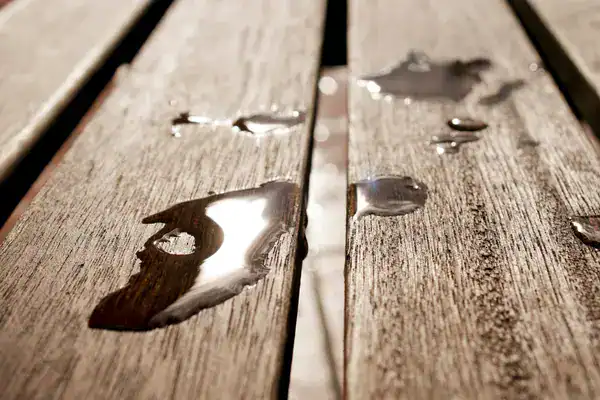
A small amount of water immediately after swimming or rain is normal. Water that repeatedly collects in the same low spot and stays there is different.
Persistent puddles can point to poor drainage, a clogged drain, an incorrect slope, or a section of deck that has settled. Standing water also creates a second problem. It can support algae and other slick buildup, making the walking surface less predictable.
Orlando is known for having intense rain storms. Keep an eye on your pool deck during and after these storms to see if water has stopped accumulating. If a noticeable puddle is still sitting there, especially if it happens repeatedly, the drainage or deck level deserves a closer look.
Watch for these patterns.
- Water that always collects in the same location
- Puddles that sit next to coping or along the pool edge
- A deck that appears to slope back toward the pool
- Algae or dark slick patches that keep developing in wet areas
What to do: Clear obvious drain blockages first. If the puddle keeps returning, have the deck slope and settlement checked rather than repeatedly treating the surface buildup.
4. The Deck Has Become Slippery When Wet
A pool deck can look perfectly fine while becoming unsafe underfoot. The real test is how it performs when wet.
Over time, foot traffic, weather, aggressive cleaning, coatings, and sealers can change the surface texture. Algae can make the problem worse. Some smooth or glossy finishes may also feel acceptable when dry but become noticeably slick after they get wet.
Pay attention if you notice any of these.
- People regularly slip or shuffle carefully through the same area
- The deck feels much slicker after sealing or coating
- Green, dark, or slimy buildup returns frequently
- High-traffic areas feel smoother than the rest of the deck
What to do: Start by addressing dirt, algae, and maintenance issues. If the clean surface is still slippery when wet, ask about an appropriate slip-resistant treatment or resurfacing option. A slippery deck doesn’t automatically require complete replacement if the slab underneath is still sound.
5. The Surface Is Crumbling, Flaking, or Breaking Apart
Fading is cosmetic. Concrete or deck material that’s physically breaking apart is different.
Spalling, flaking, deep pits, crumbling edges, or loose pieces can create sharp areas for bare feet and make the walking surface uneven. In some cases, surface deterioration can also be a sign that damage extends deeper into the slab. Look for these signs.
- Concrete flakes or chips coming loose
- Deep pits or rough exposed aggregate
- Broken corners along walking paths
- Loose or rocking pavers
- Sections that feel hollow, unstable, or different from the surrounding deck
What to do: Small isolated defects may be repairable. If deterioration is widespread, keeps returning, or appears alongside sinking and cracking, have the deck evaluated before covering it with a new coating.
6. Coping or Expansion Joints Are Loose or Failing

The pool edge gets a lot of use. Swimmers stand on the coping, grip it, push against it, and use it while getting in and out of the water. That makes loose or shifting coping more than an appearance issue.
Warning signs include the following.
- Coping stones that rock when stepped on
- Cracked or missing joint material between the deck and pool edge
- New gaps opening around the perimeter
- Loose pieces near the waterline
- Cracks or movement concentrated around the pool edge
The flexible joint between the deck and the pool also helps accommodate movement and limit water intrusion. When that joint deteriorates, water and movement can contribute to additional damage around the perimeter.
What to do: Don’t ignore coping that moves underfoot. Have loose material secured and deteriorated joints evaluated before the damage spreads.
7. Handrails, Ladders, or Their Mounting Areas Are Moving
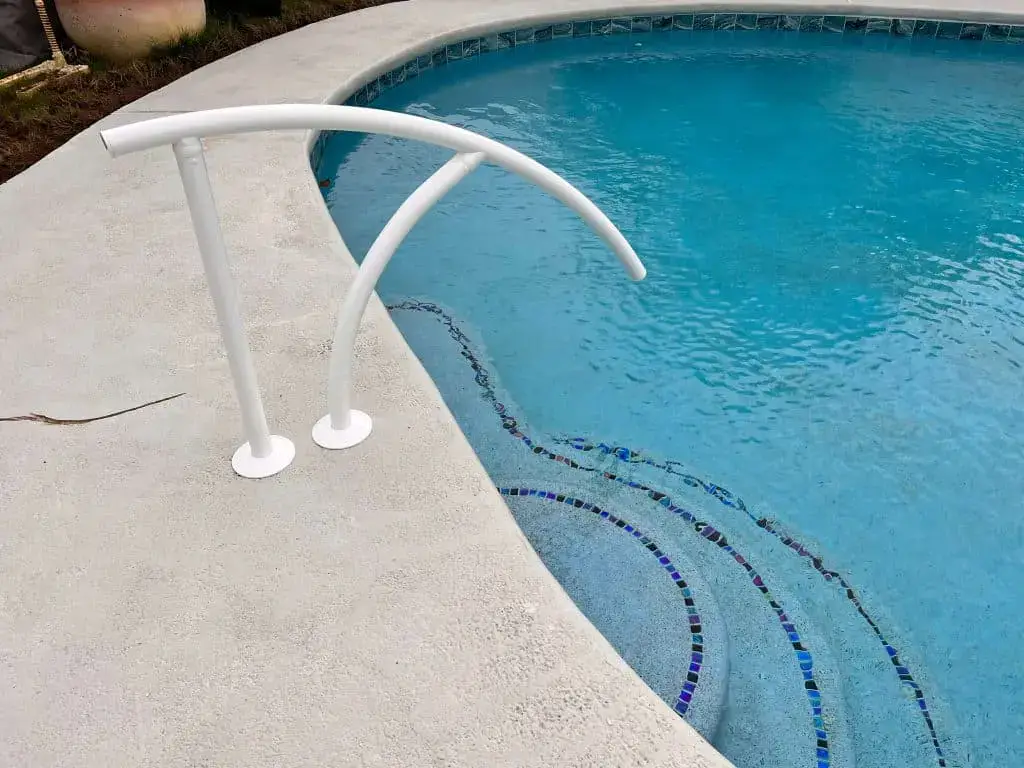
Handrails and ladders are supposed to provide support at exactly the moment a swimmer is shifting their weight near the water. They should feel solid.
Check for any of these.
- A handrail that wobbles from side to side
- A ladder that moves at its deck connection
- Cracks spreading outward from an anchor point
- Crumbling concrete around mounting hardware
- Any support that shifts when normal pressure is applied
A person entering or leaving the pool may put significant body weight on a rail. Unexpected movement can cause a loss of balance on wet steps or at the pool edge.
What to do: Treat loose pool-access hardware as a prompt repair item. The mounting area and surrounding deck should be checked, not just the visible rail or ladder.
When Is Pool Deck Damage Just Cosmetic?
A pool deck doesn’t need to look new to be safe. Some signs of aging are usually more about appearance than immediate safety, especially when the surface remains stable and level. These include the following.
- Minor fading or discoloration
- Fine hairline cracks that remain flat and unchanged
- Light surface weathering
- Small cosmetic imperfections that don’t affect footing
The key difference is movement and function. If the damage isn’t changing the walking surface, reducing traction, creating loose material, or affecting the pool edge, it may be a maintenance issue rather than an urgent safety problem.
When Should You Have the Pool Deck Professionally Checked?
You don’t need to call a contractor for every stain or tiny crack. Professional evaluation becomes more useful when the deck is clearly moving, unstable, or repeatedly developing the same problem. Call for an evaluation when you notice any of these.
- A section is actively sinking or rising
- A crack is widening or has become uneven
- Standing water keeps returning after drainage is cleared
- Large areas are hollow, crumbling, or loose
- Coping rocks or shifts
- Handrails or ladders are unstable
- Repairs keep failing in the same location
- Deck movement appears alongside unexplained pool water loss
That last point matters because an underground pool leak can sometimes wash away supporting soil. Repairing or leveling the deck without addressing the leak first can allow the same problem to return. Our complete pool repair guide covers how to check for that kind of underlying leak.
What a Professional Assessment Looks At
A thorough deck assessment focuses on why the damage is happening, not just where it shows up. A contractor will typically look at the following.
- Whether sections are moving, by comparing heights across joints and tracking changes over time
- Hollow or unsupported areas beneath the slab or pavers
- Deck slope, drains, and where water goes after rain or swimming
- The coping and the expansion joint between the deck and the pool
- Surface condition and traction, including any coatings or sealers
- Handrail and ladder anchors, plus the concrete around them
- Signs of a plumbing leak, such as unexplained water loss near damaged areas
From there, the right fix can range from a targeted crack or surface repair to leveling, resurfacing, or replacing sections of the deck.
Don’t Just Keep Patching the Same Problem
One of the easiest mistakes to make is treating every pool deck problem as a surface problem. If a crack is moving, a slab is sinking, or water is repeatedly collecting in the same area, another layer of patching or resurfacing may only hide the symptom temporarily. The underlying cause could be soil settlement, drainage, erosion, tree roots, or a plumbing leak.
Before paying for repeated cosmetic repairs, ask one simple question. Why did this damage happen? A durable repair should address that answer, not just make the deck look better for a while.
If the damage turns out to be widespread, replacing the surface with a new paver deck may be a better long-term fix than another round of patching.
Frequently Asked Questions
How do I know if my pool deck crack is a safety problem?
Fine hairline cracks that stay flat and unchanged are usually cosmetic. Cracks that are widening, have jagged edges, sit higher on one side than the other, or keep reopening after repair deserve professional evaluation.
Is a small height difference on my pool deck actually dangerous?
It can be. A vertical change of around 1/4 inch or more, the same threshold used in federal accessibility standards for walking surfaces, is generally considered enough to catch a bare foot, especially around a wet pool deck.
Why does my pool deck get slippery when wet even though it looks clean?
Weathering, coatings, sealers, and changes in surface texture over time can make a deck feel fine when dry but become noticeably slick once wet. Algae buildup in the same areas can make the problem worse.
Does standing water on my pool deck always mean a drainage problem?
Not always immediately after rain or swimming, but water that repeatedly collects in the same spot and lingers usually points to poor drainage, a clogged drain, incorrect slope, or deck settlement worth having checked.
Should I repair or replace a pool deck with safety issues?
It depends on the cause and extent of the damage. Small, isolated defects on an otherwise sound deck may be repairable, while widespread deterioration, active movement, or repeated failures in the same area usually call for a broader evaluation before choosing a fix.
Deciding Whether Your Pool Deck Needs Repair, Resurfacing, or Leveling With Sea Breeze Pools
A worn pool deck isn’t automatically an unsafe pool deck. The warning signs that matter most are movement, uneven surfaces, worsening cracks, recurring standing water, loss of traction, loose materials, and unstable pool hardware. When damage starts affecting how safely someone can walk, stand, or enter the pool, it has moved beyond being just an eyesore.
Sea Breeze Pools can help you figure out whether your deck needs a targeted repair, resurfacing, leveling, or something more. We start with an honest look at the damaged areas and the likely cause before recommending a fix. Schedule a pool deck inspection and get the cause confirmed before you spend money on a repair that might not solve it.