Pool stains are usually caused by metals, organic debris, rust, mineral scale, poor water balance, chemical misuse, or an aging pool surface. In many cases the stain is not just dirt. It is a reaction between something in the water, something sitting on the surface, and the condition of the pool finish. The good news is that the color, texture, and location of the stain usually tell you what caused it.
Key Takeaways
- Brown, orange, or rust-colored stains often come from iron, rust, or metal objects.
- Blue-green or turquoise stains are commonly linked to copper.
- Yellow, tan, or brown stains often come from leaves, pollen, berries, seeds, or other organic debris.
- White or gray rough patches are usually calcium scale or mineral buildup.
- Black, purple, or dark stains may come from manganese, black algae, or metal-related staining.
- Unbalanced pool water and older, rough, or etched surfaces both make stains more likely.
- Shocking the pool can make metal stains appear if metals are already in the water.
- Removing a stain does not always fix the source, which is why stains often come back.
The Main Causes of Pool Stains
Most pool stains trace back to a handful of common sources. Here are the ones worth knowing.
Metals in the water
Metals are the most common causes of pool stains. They enter the water through several sources:
- Well water
- Fill water
- Corroding equipment
- Copper plumbing
- Pool heaters
- Copper-based algaecides
- Saltwater systems
- Low-quality salt and chemical products.
Florida well water is worth calling out specifically, as it is notoriously high in iron and sulfur, which means pools filled from a well here are at higher risk from the start. Once metals are in the water, they may stay invisible for a while. Then, when chlorine is added or the pH climbs too high, they react and attach to the surface, creating visible stains.
The most common metal stains are iron, which shows up brown, orange, red, or rust-colored, copper, which appears blue-green or turquoise, and manganese, which leaves dark purple, black, or gray marks. A useful clue is timing. If iron stains in a pool appear soon after shocking or adding chlorine, the metals were almost certainly already present. The chlorine did not create the problem. It made the metals visible.
Organic debris
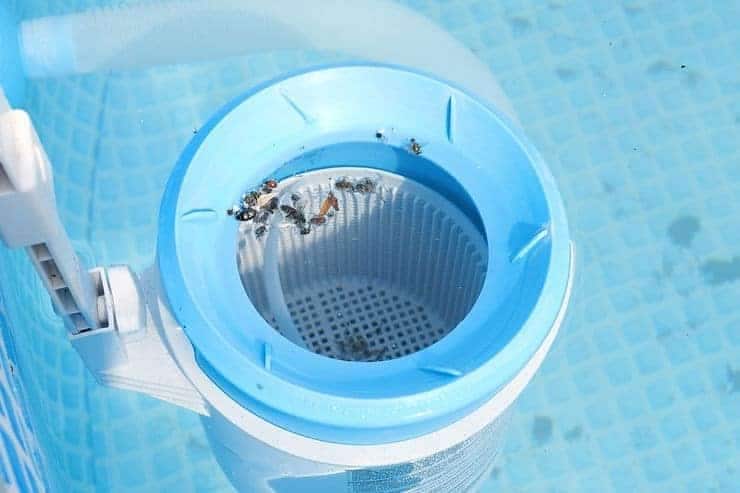
Organic stains come from natural material that sits in the pool too long, such as leaves, grass, pollen, dirt, berries, seeds, flower petals, and tree debris. As these break down, they release pigments and tannins that can leave yellow, tan, brown, or dark marks, especially on steps, corners, shallow areas, or rough plaster. These stains are often the most preventable. The longer debris sits on the floor, the more likely it is to leave a mark.
Rust
Rust stains can come from simple objects or from more serious structural issues. Hair pins, nails, screws, metal toys, pool tools, and rusting ladders or rails can all leave a small rust spot. But rust-colored stains that keep returning, appear near cracks, or seem to bleed through the surface can signal a bigger problem. In some concrete or gunite pools, water reaches the steel inside the structure and pushes rust outward. That type usually needs a professional, and it can point to the same kind of underlying issue covered in our guide on cracks in a pool.
Calcium scale and mineral buildup
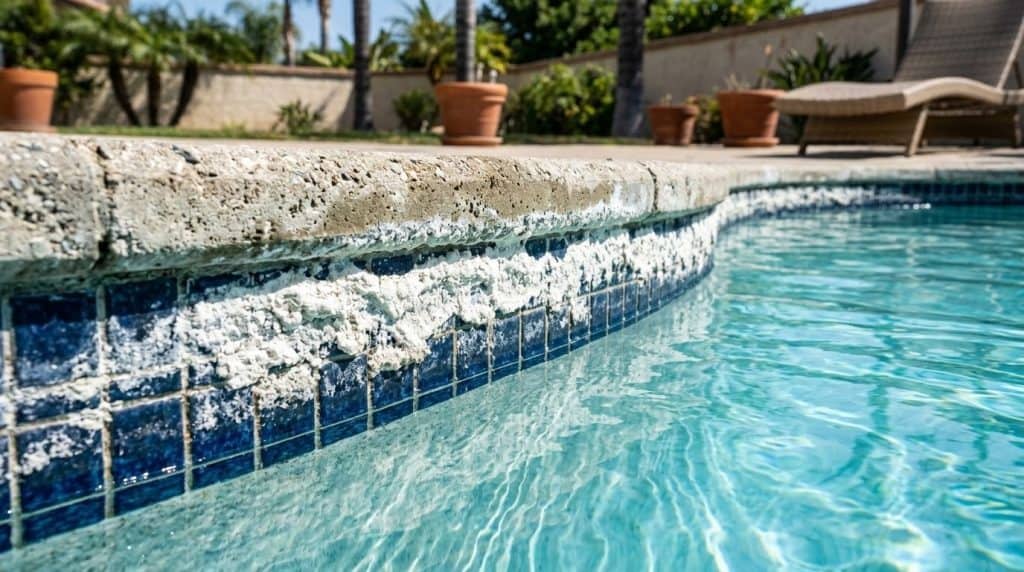
Some stains are actually mineral deposits. Calcium scale forms when the water has too much mineral content or the balance is off, and it is more likely with high pH, high calcium hardness, high alkalinity, warm water, and heavy evaporation. Scale tends to look like white patches, gray buildup, chalky residue, rough spots, or waterline rings. It is not a stain in the same sense as metal or organic discoloration, but it makes the surface look dull and dirty, and it traps debris that makes discoloration worse.
Poor water balance
Poor water balance is one of the biggest reasons stains develop at all. The levels worth watching are pH, chlorine, total alkalinity, calcium hardness, stabilizer, and metals. When water is unbalanced, two things can go wrong. It can turn aggressive and wear the surface down, leaving plaster rough and porous, or it can turn scale-forming and leave mineral deposits behind. Both make staining more likely. The CDC recommends keeping pool pH between 7.2 and 7.8, which not only supports safe, effective chlorine but also helps protect the surface and keep metals and minerals from staining it.
Chemical misuse
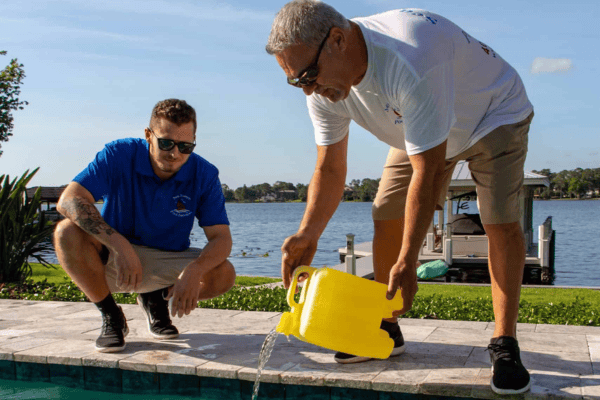
Chemicals help when used correctly, but the wrong technique can cause stains, bleaching, or surface damage. The usual mistakes are letting granular shock sit on the floor, pouring acid onto one spot, adding too much chlorine at once, shocking before checking for metals, and ignoring label directions. Many chemicals are highly concentrated before they dissolve, so if they settle on the surface they can bleach vinyl, etch plaster, or create rough spots that collect stains later. The simple rule is to never let undissolved chemicals sit directly on the pool floor.
Aging or damaged surfaces
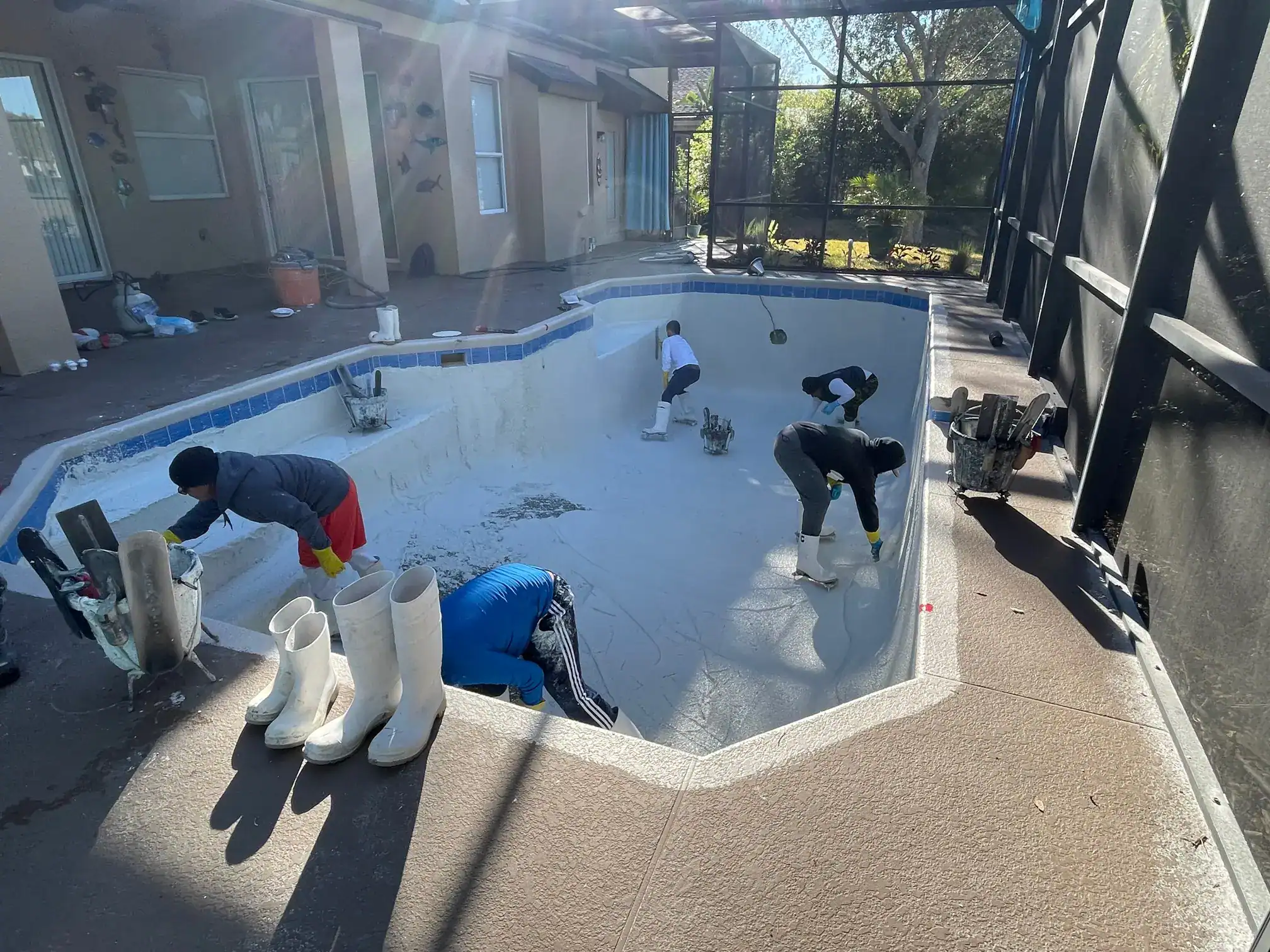
Older surfaces stain more easily. As a finish ages it becomes rough, porous, cracked, etched, or thin, and those areas trap metals, dirt, algae, tannins, and scale. This is especially common with older plaster. Sometimes what looks like a stain is actually surface wear or exposed underlying material. If the surface feels rough and stains keep returning, the water may not be the only issue. The finish itself may need repair or resurfacing.
How to Tell What Kind of Pool Stain You Have
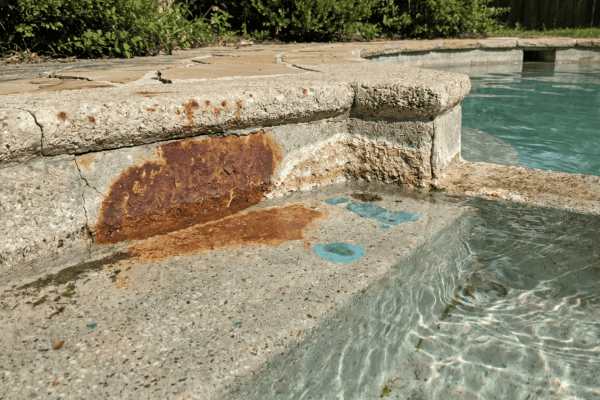
You do not need to be a chemistry expert to narrow it down. Start with a few questions. What color is the stain? Is it smooth or rough? Does it brush off? Is it near steps, fittings, or the waterline? Did it appear after adding chlorine? Did debris sit there? Does it keep coming back? Is it near a crack?
A few rules of thumb help. If it brushes off easily, it may be dirt or algae. If it is flat and does not brush off, it is likely a stain. If it feels rough or crusty, it is probably scale. If it appeared right after shocking, metals are likely involved. And if it is rust-colored and keeps bleeding through, call a professional. When in doubt, avoid guessing with harsh chemicals, because the wrong treatment can make some stains worse.
Why Did Stains Appear After Adding Chlorine?
This is one of the most common questions pool owners ask. If stains appeared shortly after adding chlorine or shocking, dissolved metals were probably already in the water. Chlorine reacts with metals like iron and copper, and once that happens the metals become visible and attach to the surface. That is why a clear pool can suddenly develop brown, orange, blue-green, or dark stains after treatment. The chlorine is rarely the true source. It is the trigger.
Why Do Pool Stains Keep Coming Back?
Stains return when the source was never fixed. The metals may still be in the water, the balance may still be off, debris may keep settling in the same spots, scales may keep forming, equipment may still be corroding, or the surface may be too worn to resist staining. A metal stain remover can lift a stain from the surface, but if the metals remain in the water, it will stain again. This is exactly why prevention and water balance matter as much as removal.
How to Prevent Pool Stains
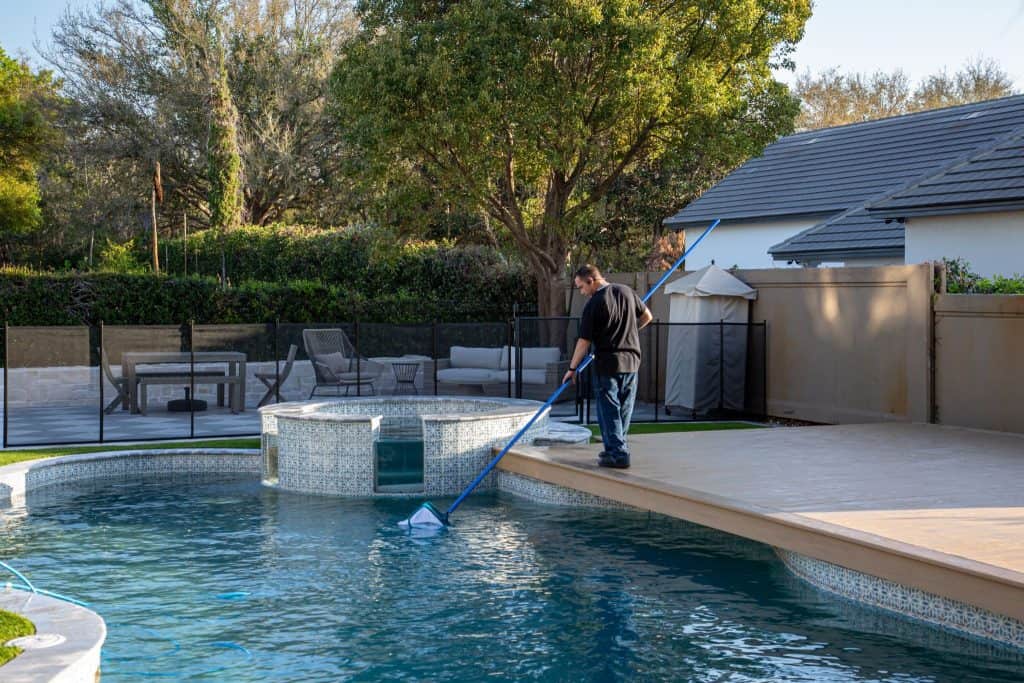
The best way to deal with stains is to stop them before they start. Here are a few preventative maintenance tasks you can do to a better performing pool.
- Test the water regularly and keep pH, chlorine, alkalinity, and calcium hardness balanced.
- Remove leaves, berries, and debris quickly, and brush and vacuum often.
- Keep metal objects out of the pool, and check ladders, rails, heaters, and equipment for corrosion.
- Be careful filling with well water, and use a metal sequestrant if metals are a known issue.
- Follow chemical label directions, never let undissolved chemicals sit on the floor, clean waterline buildup before it hardens into scale, and repair cracks or rough spots early.
For most pools, these simple habits can be the difference between a simple cleaning job and a potentially costly repair or renovation.
Can Pool Stains Be Removed?
Many stains can be reduced or removed, but the right treatment depends on the cause. Organic stains often respond to chlorine and brushing. Metal stains usually need a dedicated pool stain remover and a sequestrant.
Scale may need brushing, a scale remover, or professional cleaning. Rust from a metal object is often treatable, but rust from inside the pool structure needs professional attention, and severe surface damage may call for resurfacing. Avoid using strong chemicals without knowing the stain type, since treating a metal stain like an organic one can make it worse.
When to Call a Pool Professional
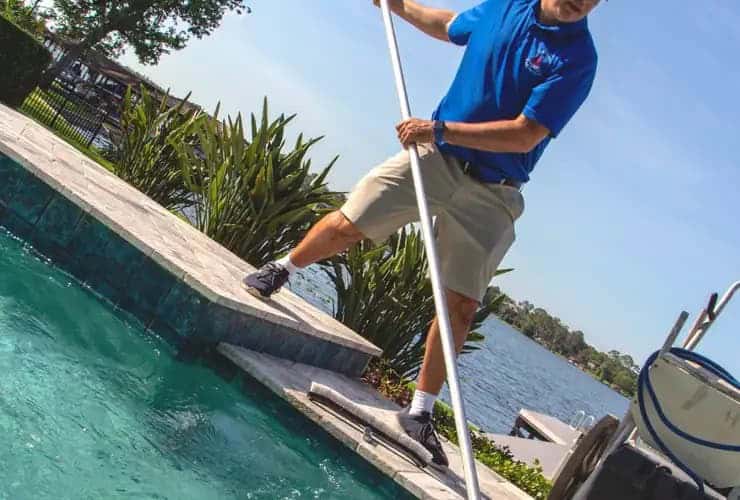
Reach out to a professional if the stain covers a large area, keeps returning, or appears near cracks, if rust seems to bleed through the surface, if there is heavy scale, or if the surface feels rough, etched, or damaged. The same applies if you are unsure whether you are dealing with algae, metal, rust, or scale, or if treatments have not worked.
A professional can test the water, identify the stain type, and recommend the safest fix. When staining is tied to a worn finish, our pool repair and pool remodeling services address the surface itself, not just the symptom.
Frequently Asked Questions
What is the most common cause of pool stains?
The most common causes are metals, organic debris, rust, calcium scale, poor water balance, chemical misuse, and aging surfaces.
Why did my pool stain after I shocked it?
Shock can cause dissolved metals to oxidize and attach to the surface, creating sudden brown, orange, blue-green, or dark stains.
Can well water cause pool stains?
Yes. Well water often contains iron, manganese, or calcium that can stain surfaces once it reacts with chlorine or high pH.
Are pool stains and algae the same thing?
No. Algae is living growth that may feel slimy or brush off. A stain is a discoloration attached to or embedded in the surface.
Can pool stains be removed without draining the pool?
Many organic and metal stains can be treated without draining. Severe scale, structural rust, or surface damage may require professional service.
Why do stains keep coming back?
Because the source is still present, whether that is metals in the water, unbalanced chemistry, settling debris, or a worn surface.
How Sea Breeze Pools Helps You Tackle Pool Stains for Good
So what causes pool stains? Most often it is metals, organic debris, rust, calcium scale, poor water balance, chemical misuse, or an aging finish, and the fastest way to narrow it down is to read the stain’s color, texture, location, and timing. Brown or orange usually means iron or rust, blue-green means copper, yellow or tan means organic debris, and white or gray rough patches mean scale. The lasting fix is always to address the cause, not just lift the mark.
That is where a trusted local team helps. Sea Breeze Pools has helped Central Florida homeowners diagnose stains, balance their water, and repair worn surfaces the right way, so the stains do not simply return. If stains keep showing up and you want a clear answer, request a free estimate or schedule a pool service visit and we will identify the cause and the safest way to fix it.