The best custom pool features for Florida homeowners are the ones that reduce maintenance, control energy use, and make the pool easier to manage year-round. For most pools, a variable-speed pump with smart scheduling provides the strongest starting point. App-based automation, robotic cleaners, automated sanitation, water-level monitoring, and efficient heat pumps can add even more convenience from there.
Decorative lighting and automated water features are genuinely popular, but they usually provide less practical value than equipment that lowers costs or reduces maintenance. Here is how the most popular smart pool features actually compare, and which ones are worth prioritizing.
Key Takeaways
- Variable-speed pumps and smart scheduling typically provide the greatest combination of energy savings and convenience.
- App-based automation lets homeowners control pumps, heaters, lights, sanitation, and water features remotely.
- Robotic cleaners, saltwater chlorinators, and chemical-monitoring systems reduce routine pool work.
- Smart water-level systems can protect equipment and warn homeowners about unusual water loss.
- Florida’s heat, rain, humidity, lightning, and salt air make equipment quality and weather protection especially important.
- Most smart features can be added to an existing pool, but equipment compatibility and installation costs should be checked first.
- Smart technology makes pool care easier, but it does not eliminate maintenance or replace required safety measures.
The Most Popular Smart Pool Features at a Glance
| Smart pool feature | Main benefit | Best for | General cost level |
| Variable-speed pump | Lower energy use | Almost every pool | Moderate |
| App-based automation | Centralized remote control | Busy or traveling homeowners | Moderate to high |
| Robotic pool cleaner | Less manual cleaning | Pools that collect leaves, sand, or debris | Moderate |
| Saltwater chlorinator | Consistent chlorine production | Homeowners wanting simpler sanitation | Moderate |
| Chemical monitoring | Water-balance alerts or automatic dosing | High-use and year-round pools | Moderate to high |
| Smart water-level system | Automatic refilling and possible leak alerts | Seasonal or frequently vacant homes | Moderate |
| Smart heat pump | Remote temperature control | Winter swimming and attached spas | High |
| Smart LED lighting | Appearance and entertainment | Backyard entertaining | Low to moderate |
| Smart pool alarm | Added safety notifications | Families and rental properties | Low to moderate |
Costs depend on the existing equipment, pool layout, electrical system, and amount of plumbing or wiring required.
1. Variable-Speed Pumps With Smart Scheduling
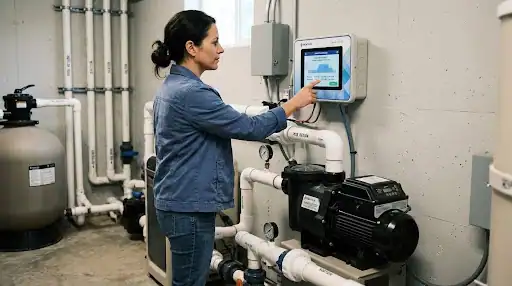
A variable-speed pump is often the best first upgrade for a Florida pool. Older single-speed pumps run at full power whenever they’re operating, while a variable-speed model runs more slowly during routine filtration and increases speed only when needed for heating, cleaning, or water features. That difference brings lower electricity use, quieter operation, more consistent filtration, less strain on plumbing and equipment, and flexible scheduling based on how the pool actually gets used.
This isn’t just a smart choice, it’s increasingly the only legal one. The US Department of Energy’s efficiency standard under 10 CFR Part 431 has, since 2021, prohibited the manufacture of most single-speed pool pumps above 0.711 total horsepower for sale in the US, and Florida’s Building Code separately requires qualifying replacement or newly installed filtration pumps at 1 horsepower or greater to use variable-speed or two-speed technology. Your pool contractor should confirm the current requirements for your specific equipment and jurisdiction.
Actual savings depend on the pump size, daily schedule, pool volume, electricity rate, and how efficiently the system is programmed. The pump must also be sized correctly, since a larger model is not automatically better.
2. App-Based Pool Automation
A central automation system acts as the control center for the pool. Depending on the equipment, homeowners may use one app to start or stop the pump, change filtration schedules, adjust pool or spa temperatures, turn lights and water features on, change valve positions, monitor sanitation equipment, and receive maintenance or equipment alerts.
This is particularly useful for seasonal residents, frequent travelers, and owners of vacation properties, letting the homeowner or pool professional monitor basic operations remotely instead of returning to a neglected pool. Before buying an automation system, confirm that it can communicate with the existing pump, heater, lights, valves, and saltwater system, since some controllers work best when all the equipment comes from the same manufacturer while others offer broader compatibility. Reliable Wi-Fi must also reach the equipment area, and Florida’s concrete-block construction and impact-resistant windows can weaken the signal between an indoor router and an outdoor equipment pad.
3. Robotic Pool Cleaners
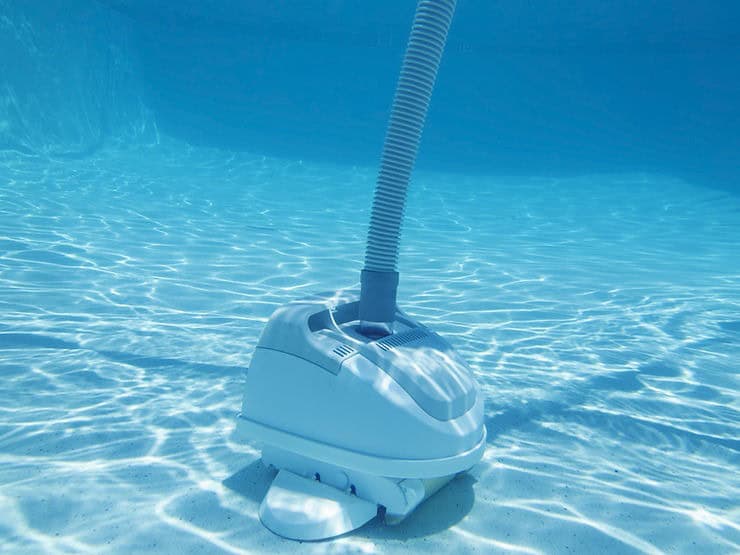
Robotic cleaners are popular because they provide an immediate, visible benefit: less time spent vacuuming the pool. Unlike suction or pressure-side cleaners, robotic models operate independently of the main filtration system, and many can clean the pool floor, walls, waterline, or a combination of these areas. They’re especially helpful in Florida pools exposed to leaves and landscaping debris, sand and fine dirt, post-storm debris, year-round use, and screen-enclosure particles.
A robotic cleaner doesn’t eliminate all maintenance. Its filter basket must be emptied, and brushes, tracks, or other wear components eventually need replacement. Homeowners should also check whether a model suits their pool’s size, shape, steps, surface, and slope.
4. Automated Chemical Monitoring and Saltwater Chlorination
Florida’s strong sunlight, warm water, frequent rain, and long swimming season can make water chemistry genuinely difficult to maintain. Several smart features help here. Chemical-monitoring devices test selected water conditions and send alerts when attention is needed, making it easier to catch a problem before the water turns cloudy or algae develops. Saltwater chlorinators produce chlorine gradually while the pump runs, providing more consistent sanitation and reducing the need to add chlorine manually. Automatic chemical-dosing systems monitor the water and dispense sanitizer or acid automatically, offering the most hands-off experience, though they cost more and require regular calibration and professional maintenance.
No chemical system is completely set-it-and-forget-it. Homeowners should still test the water periodically, inspect the equipment, and confirm sensors are reading accurately.
5. Smart Water-Level and Leak Alerts
A pool can lose water through evaporation, splashing, backwashing, or a leak. Smart water-level systems keep the pool at a selected level by adding water automatically when needed, and more advanced systems track how frequently water gets added, where an unusual increase can serve as an early warning of a possible leak.
This is genuinely valuable, since low water can cause the pump to draw air, lose prime, or overheat, and it’s especially useful for homeowners who travel or leave their Florida property vacant part of the year. That said, an automatic filler can also hide a leak if no usage monitoring is included, quietly adding water without showing the homeowner how much is actually being used. Choose a system that provides usage history or alerts, and contact a leak-detection professional if water loss appears abnormal.
6. Smart Heat Pumps and Temperature Control
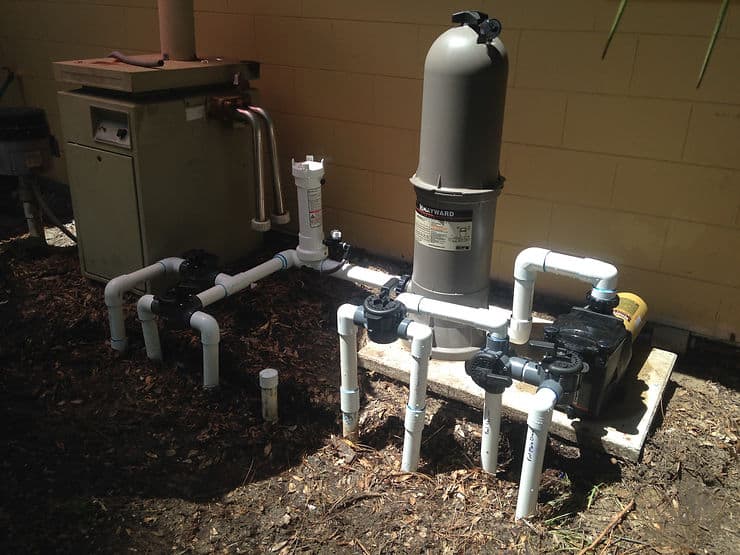
A smart heat pump allows homeowners to schedule heating, change the temperature remotely, and coordinate heater operation with the pool pump. Heat pumps work well in Florida because they transfer warmth from the surrounding air into the pool water, and they’re most valuable for swimming during cooler months, maintaining a comfortable temperature overnight, heating an attached spa, and preparing the pool before arriving at a seasonal home.
Heating costs vary significantly based on pool size, outside temperature, wind, desired water temperature, operating schedule, and whether a pool cover is used. If the pool is rarely used during cooler weather, a smart heater may not provide enough value to justify the investment.
7. Smart LED Lighting and Automated Water Features
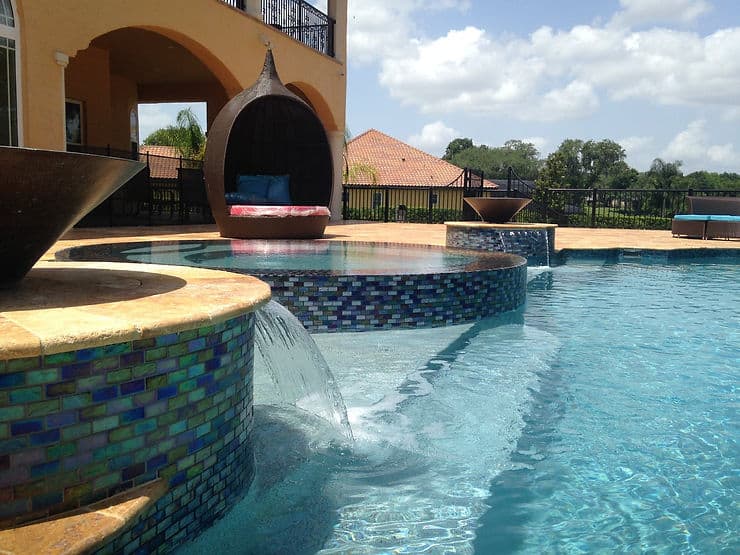
Smart LED lighting lets homeowners adjust colors, brightness, and schedules from an app, and some systems coordinate pool lighting with landscape lights and other backyard features. Automation can also control waterfalls, deck jets, bubblers, fountains, and spa spillways.
These upgrades can genuinely transform the atmosphere of a backyard and make entertaining easier. However, they’re mainly lifestyle features, and homeowners working with a limited budget should normally prioritize the pump, cleaning, sanitation, and safety systems first. Replacing underwater pool lights may require an electrical permit and inspection, so use a qualified professional rather than treating the project like a standard lightbulb replacement.
8. Smart Pool Alarms and Safety Features
Smart safety equipment can include water-entry alarms, door alarms, cameras, and systems that send alerts to a homeowner’s phone. These devices may add an extra layer of protection, but they do not replace adult supervision, code-compliant barriers, self-closing and self-latching gates, required door or window protection, or properly secured safety covers.
Florida’s Residential Swimming Pool Safety Act requires qualifying newly constructed residential pools to include an approved safety feature, and local requirements may also apply when a pool is built or substantially renovated. Homeowners should select alarms and covers that meet recognized safety standards, and a notification that depends entirely on Wi-Fi should never be the only safety measure, since internet and power interruptions can genuinely happen.
Which Smart Pool Features Are Worth the Investment?
The right order depends on the pool and how the homeowner uses it. The strongest starting points are usually a variable-speed pump, smart scheduling or basic automation, required safety barriers and alarms, and surge protection for connected equipment. High-value convenience upgrades from there include a robotic cleaner, saltwater chlorinator, smart water-level monitoring, chemical alerts, and an efficient heat pump for homeowners who swim in cooler weather. Primarily luxury upgrades, worth adding once the essentials are covered, include fully automatic chemical dosing, color-changing lighting, automated waterfalls and deck jets, whole-backyard automation, and motorized pool covers.
A smart feature is worth buying when it solves a recurring problem. If the main concern is a high electric bill, start with the pump. If constant cleaning is the problem, consider a robotic cleaner. If the property is frequently vacant, remote control and water-level alerts may be more valuable than anything else on the list.
How Much Does Pool Automation Cost in Florida?

Installation costs vary widely, but general planning ranges look something like this: basic smart control typically runs approximately $1,500 to $3,500, mid-range automation runs approximately $2,500 to $6,500, and advanced automation with chemistry and water monitoring runs approximately $5,000 to $12,500 or more. Retrofitting an existing pool usually costs more than adding automation during construction, since the contractor may need to change plumbing, install wiring, add valve actuators, or upgrade the electrical panel.
These figures should be treated as planning ranges, not fixed quotes. Pool size, equipment brands, local permit fees, labor rates, and electrical requirements can all change the total.
Can Smart Features Be Added to an Existing Pool?
Yes, and this is genuinely where a repair and remodeling specialist earns its keep. Most smart pool features can be retrofitted, including pumps, heaters, cleaners, lighting, chlorinators, water-level systems, and automation controllers. Before installation, a contractor should evaluate existing equipment compatibility, available electrical capacity, plumbing configuration, space on the equipment pad, Wi-Fi coverage, the condition of the current pump and heater, and permit and inspection requirements.
It may not make financial sense to connect an outdated pump or heater to a new automation hub. Replacing older equipment as part of the upgrade can sometimes create a more reliable system overall, rather than layering smart controls onto equipment that’s already near the end of its life.
What Florida Homeowners Should Check Before Installation
Florida’s climate can be hard on outdoor electronics, and heat, humidity, heavy rain, coastal salt air, flooding, and lightning all deserve real consideration. Ask your installer whether the equipment is rated for outdoor Florida conditions, whether exposed components are corrosion-resistant, whether the equipment pad is protected from standing or floodwater, whether surge protection will be installed, and whether Wi-Fi reliably reaches the controller.
Also ask what happens if the internet goes down, whether app access or software updates carry fees, who provides repairs and technical support, which sensors or components will eventually need replacement, whether permits and inspections will be handled, and whether the installer is appropriately licensed for the pool and electrical work involved. Do not assume every device can be connected simply because it’s marketed as smart. Compatibility and professional installation matter more than the number of app features.
Frequently Asked Questions
What is the best smart pool feature to install first?
For many Florida homeowners, a properly sized variable-speed pump with smart scheduling is the best starting point, since it reduces energy use, improves filtration control, and supports future automation.
Can I control my entire pool from my phone?
Possibly. A compatible automation hub can control multiple systems from one app, but the pump, heater, lights, valves, and sanitation equipment all need to be supported by that specific controller.
Do smart pool systems require monthly fees?
Many leading pool-automation platforms provide standard app controls without a monthly subscription. Always confirm current fees, cloud-service policies, and long-term app support before purchasing.
Do smart features eliminate pool maintenance?
No. They reduce manual work, but filters still need cleaning, water still needs testing, and sensors, salt cells, robotic-cleaner parts, and other components eventually wear out.
Do I need a permit to install smart pool equipment in Florida?
It depends on the project and local jurisdiction. Pump replacements, new heaters, electrical upgrades, automation panels, and underwater-lighting work may require permits and inspections, so confirm requirements with your local building department or licensed contractor.
Choosing Smart Pool Features That Make Ownership Easier With Sea Breeze Pools
The best smart pool system is not necessarily the one with the most features. It’s the one that solves the homeowner’s most frequent problems, whether that’s a high electric bill, constant cleaning, or a property that sits vacant for weeks at a time. Start with energy efficiency, maintenance, water monitoring, and safety, then add lighting, water features, and more advanced automation once those essentials are covered.
As a Central Florida pool company built around repair and remodeling, Sea Breeze Pools is exactly the team to evaluate whether your existing equipment, electrical capacity, and connectivity can support the smart upgrades you actually want, before you spend money on features that won’t fit. If you’re ready to modernize your pool with custom features built for Florida’s climate, explore our pool remodeling services or request a free equipment evaluation to see what upgrades make sense for your setup.