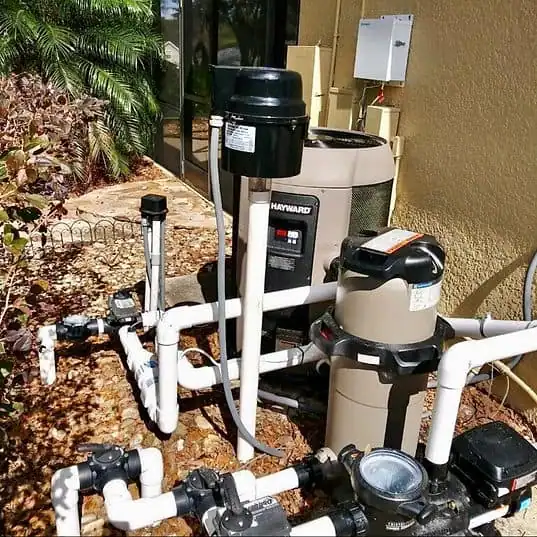
Pool equipment in Florida typically does not last as long as it does in cooler parts of the country. Year-round operation, high heat, humidity, salt air, heavy rain, and frequent electrical surges all put extra stress on pumps, heaters, filters, salt systems, and automation equipment.
As a general rule, Florida pool owners should expect most major components to last anywhere from 3 to 15 years, depending on the equipment type, maintenance, water chemistry, and exposure to the elements.
Key Takeaways
- Florida’s year-round pool operation, heat, humidity, corrosion, and electrical surges shorten equipment life compared to milder climates.
- Pool pumps commonly last about 5 to 12 years, depending on whether they’re single-speed or variable-speed units.
- Gas pool heaters typically last 5 to 10 years, while heat pumps often last 8 to 15 years in Florida.
- Salt chlorine cells usually have a shorter lifespan, often around 3 to 7 years depending on water chemistry and coastal exposure.
- Maintenance, balanced water chemistry, and protection from electrical surges can help prevent premature equipment failure.
Average Pool Equipment Lifespan in Florida
Here’s a general look at how long common pool equipment typically lasts in Florida.
| Pool Equipment | Typical Florida Lifespan |
| Single-speed pool pump | 5–8 years |
| Variable-speed pool pump | 8–12 years |
| Gas pool heater | 5–10 years |
| Pool heat pump | 8–15 years |
| Cartridge filter media | 2–3 years |
| Sand filter tank | 8–12 years |
| DE filter grids | 4–7 years |
| Salt chlorine cell | 3–7 years |
| Automation control panel | 7–10 years |
| LED pool lights | 10+ years |
These numbers should be treated as general planning ranges, not exact expiration dates. Well-maintained equipment can last longer, while equipment exposed to poor water chemistry, corrosion, or electrical damage may fail much sooner.
Why Does Pool Equipment Wear Out Faster in Florida?
Florida creates a genuinely tougher operating environment for pool equipment than many other parts of the country.
In many northern climates, pool equipment sits idle for part of the year. Florida pools often operate through all 12 months, which means pumps, filters, heaters, and salt systems accumulate significantly more operating hours annually, with pumps sometimes running 8 to 12 hours per day during peak summer periods. More operating hours generally mean more wear on motors, seals, bearings, and other components.
High temperatures place additional stress on motors and electronics, humidity contributes to corrosion, and coastal properties face additional exposure from salt in the air, which can corrode fasteners, electrical contacts, and other equipment components over time. Modern pool equipment also often contains sensitive electronics, and variable-speed pumps, digital heaters, and automation systems can be damaged by voltage surges associated with Florida’s frequent lightning activity, which is exactly why electrical protection plays a real role in equipment longevity here.
Which Pool Equipment Usually Needs Replacement First?

Some pool components naturally wear out sooner than others. Salt chlorine generator cells are among the shorter-lived major pool components, typically lasting around 3 to 7 years in Florida depending on water chemistry and coastal exposure, with high operating hours and calcium buildup on the cell plates contributing to faster wear. Cartridge filter tanks may remain usable much longer, but the actual filter media typically needs replacement sooner, since Florida’s rain, organic debris, oils, and frequent pool use can reduce cartridge media lifespan to about 2 to 3 years.
Pump lifespan depends heavily on the type of pump. A single-speed pump typically lasts around 5 to 8 years in Florida, while a variable-speed pump may last approximately 8 to 12 years, since variable-speed pumps can operate at lower speeds for much of the day, which reduces heat and mechanical stress compared with running continuously at full speed. Variable-speed pumps also carry real energy benefits alongside that longer lifespan. Florida Building Code studied 120 pools and found that some owners cut their pumping electricity bills by as much as 75% through efficient pump measures, savings that are typically even larger in Florida given the long swimming season. We go deeper into which smart and energy-efficient upgrades are actually worth it in our guide to custom pool features.
What Shortens the Life of Pool Equipment?
Age is only one factor. Several conditions can cause pool equipment to fail before reaching its expected lifespan, including poor or inconsistent water chemistry, heavy year-round operating hours, lack of regular cleaning and maintenance, excessive moisture or corrosion, coastal salt-air exposure, calcium buildup, lightning and electrical surges, and repeated overheating or mechanical strain.
Water chemistry is especially important for heaters and salt systems, since low pH and unstable alkalinity can contribute to corrosion and scale buildup inside heater components.
How Can You Make Pool Equipment Last Longer?

You can’t eliminate Florida’s heat, humidity, or storms, but you can reduce unnecessary wear. Poor water chemistry can damage heaters, salt cells, seals, and other components, so regularly maintaining proper pH, alkalinity, calcium hardness, and sanitizer levels can help reduce corrosion and scaling. Dirty filters increase system resistance and make the pump work harder, so stay on top of filter cleaning, remove debris from the equipment area, and make sure heaters and heat pumps have proper airflow.
Preventive maintenance can help identify worn parts before they create larger problems, and regular professional maintenance, keeping coils clean, clearing debris, and checking system operation, can meaningfully extend the useful life of heat pumps specifically. Variable-speed pumps, automation panels, and digital heaters contain electronics that can be vulnerable to power surges, so surge protection is worth treating as a real safeguard for modern pool equipment in Florida rather than an optional extra.
How Do You Know When Pool Equipment Needs to Be Replaced?
Equipment doesn’t always fail without warning. Common signs that a pool component may be approaching the end of its useful life include grinding, screeching, or unusual pump noises, frequent breaker trips or shutdowns, noticeably weaker water circulation, persistent salt-cell warning messages, a heater that takes much longer to warm the pool, repeated leaks, visible cracking or corrosion, increasing repair frequency, and equipment that repeatedly stops working after repairs.
One warning sign doesn’t automatically mean replacement is necessary. The equipment’s age, condition, and repair history should all be considered together.
Should You Repair or Replace Old Pool Equipment?

A small repair can make sense when the equipment is still relatively young and otherwise operating well. Replacement becomes more attractive when the equipment is near or beyond its typical lifespan, major components have failed, breakdowns keep happening, replacement parts are difficult to obtain, or repair costs are approaching the cost of a new unit.
A commonly used rule of thumb in the industry: when equipment is under about 7 years old and repairs cost less than roughly half of replacement, repair is often reasonable. When equipment is more than 10 years old, repeatedly failing, or requires repairs costing around half to 60% of replacement, replacement may be the better financial decision. The exact answer still depends on the specific equipment, since a 10-year-old heat pump may still have useful life remaining, while an 8-year-old single-speed pump may already be near the end of its expected Florida lifespan.
Plan for Pool Equipment Replacement Before Something Breaks
Pool equipment eventually wears out, so replacement should be treated as a normal ownership expense rather than a surprise. Knowing the approximate age of your equipment can help you anticipate upcoming costs.
For example, a Florida pool with a 7-year-old single-speed pump, a 4-year-old salt chlorine cell, and a 9-year-old gas heater may have several components approaching normal replacement age at the same time. Setting aside a modest annual amount for pool equipment maintenance and eventual replacement, rather than treating each failure as an unplanned expense, can make it far easier to replace failing equipment before it causes extended pool downtime or an emergency repair.
Frequently Asked Questions
How long does a pool pump last in Florida?
A single-speed pump typically lasts about 5 to 8 years, while a variable-speed pump often lasts 8 to 12 years, since running at lower speeds for much of the day reduces heat and mechanical stress.
How long does a pool heater last in Florida?
Gas heaters typically last 5 to 10 years, while heat pumps often last longer, around 8 to 15 years, depending on maintenance and exposure to salt air.
How often do salt chlorine cells need to be replaced?
Most salt cells last around 3 to 7 years in Florida, with coastal exposure and water chemistry playing a major role in how quickly they wear out.
Does Florida’s climate really shorten pool equipment lifespan?
Yes. Year-round operation, heat, humidity, salt air, and frequent electrical storms all place more stress on pool equipment here than in milder, more seasonal climates.
Should I repair or replace aging pool equipment?
It depends on the equipment’s age and the repair cost relative to replacement. As a general guide, repair often makes sense for equipment under about 7 years old with repair costs under roughly half of replacement, while equipment over 10 years old or facing repair costs near half to 60% of replacement is often better replaced.
Getting a Clear Answer on Your Pool Equipment With Sea Breeze Pools
Most Florida pool owners should expect major pool equipment to last roughly 3 to 15 years, depending on the component. Pool pumps generally fall in the 5- to 12-year range, heaters in the 5- to 15-year range, and salt chlorine cells around 3 to 7 years. Florida’s year-round operation, heat, humidity, salt exposure, and electrical storms can all shorten equipment life.
Good maintenance won’t make equipment last forever, but it can help prevent avoidable failures and give you a better chance of reaching the upper end of its expected lifespan. As a Central Florida pool repair and remodeling company, we can tell you honestly whether your equipment still has useful life left or is worth replacing before it fails at the worst possible time. If your equipment is approaching its expected replacement age and beginning to need frequent repairs, schedule an equipment inspection before it fails completely.