A Florida outdoor kitchen works best when you settle a few decisions before you shop for a grill. Those decisions are where the kitchen sits, how you stay comfortable in heat and rain, which utilities it needs, and which materials can handle the weather.
This guide walks through those choices in the order they affect the project. For the bigger picture, read why Orlando homeowners invest in outdoor living spaces.
Key Takeaways
- Plan work zones and walkways first, because appliances only fit well inside a layout that works.
- Keep cooking and prep surfaces a safe distance from pool splash and wet foot traffic.
- Shade, airflow, and drainage matter as much as the grill in Florida weather.
- Every gas line, outlet, and sink adds trade work, which can affect cost and permits.
- Confirm permit and HOA requirements with your city or county before construction starts.
Start With How You Will Use the Kitchen
Map the Four Work Zones
Every outdoor kitchen has the same four jobs. People prepare food, cook it, serve it, and clean up.
Give each job its own stretch of counter. Prep space beside the grill is the one most homeowners wish they had added.
Choose a Layout That Fits the Patio
A straight-line layout keeps the grill, counter, and storage along one wall. It suits narrow patios and homeowners who mostly grill and serve simple meals.
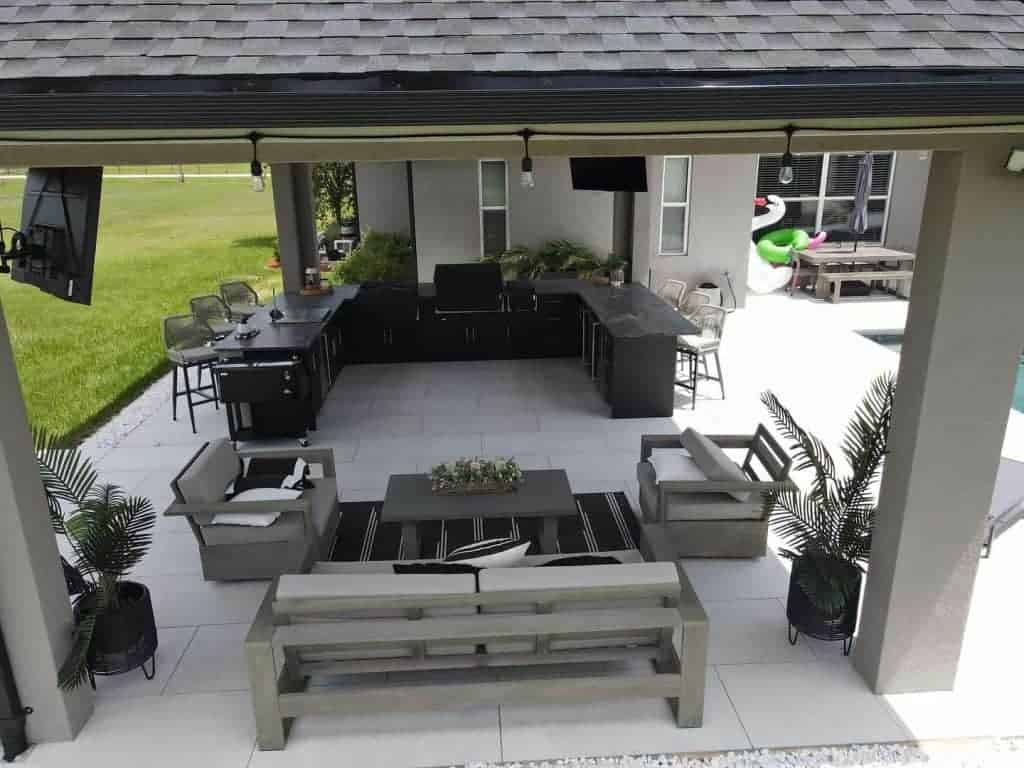
An L-shape separates the cook from a second prep or serving surface. It often balances function and seating in a medium-size backyard.
A U-shape gives frequent cooks more counter, storage, and appliance positions. It needs a large patio with open walkways, so scale it back if it blocks access to the yard or pool.
Leave a Buffer Between the Kitchen and the Pool
Pool splash, wet footprints, and bare feet all travel toward the nearest dry surface. Place the cooking and prep areas where that traffic does not cross them.
If the kitchen sits near the water, ask your installer about the electrical placement rules for the spot you chose. Do this before you fix the layout.

Plan Shade, Ventilation, and Weather Exposure
Pick a Shade Structure
Shade makes a countertop usable in the afternoon. These are the common choices:
- A covered patio or lanai gives dependable overhead shelter, especially when the space already exists.
- A pergola gives partial shade, and adjustable louvers add control but vary in rain protection.
- A pavilion or roof extension creates a sheltered outdoor room, though permanent construction may need permits.
Sea Breeze builds custom pergolas for Orlando homes, which can be planned together with the kitchen.
Account for Sun, Wind, and Smoke
Keep prep areas out of direct western afternoon sun when you can. Position the grill so smoke is less likely to drift toward the dining area.
Check Before Placing a Grill Under a Roof
A roof alone does not make covered grilling safe. Read the grill manual for required clearances and ventilation, and confirm that the manufacturer allows covered use.
Send Rainwater Away From the Kitchen
Water should move away from the house and the cabinet base, not collect around electrical equipment. Heavy summer rain makes this a real issue in Orlando, and our post on pool deck drainage in the rainy season explains how slope and drains work.
Plan Lighting and Storage Early
Light the Work Areas, Not Just the Mood
Add task lighting over the grill and prep counter, plus softer light for paths and seating. Use fixtures rated for outdoor wet locations. If you already use app-controlled lighting, see how it fits in our guide to smart pool features.
Give Tools and Supplies a Dry Home
Plan sealed drawers or cabinets for utensils, towels, and supplies. Enclosed gas storage needs appropriate ventilation, so ask your installer how to handle propane cylinders.
Decide Which Utilities You Need
Finalize utilities before pavers go down or the island is built. Moving a connection later can mean cutting into finished surfaces.
Gas: Natural Gas or Propane?
Natural gas can be convenient when the home already has service, because there is no tank to replace. Propane works where natural gas is unavailable.
Either way, check the grill’s fuel compatibility. Have permanent gas piping handled by a qualified professional.
Electricity: Outlets, Lighting, and Appliances
List everything that needs power, including an outdoor refrigerator, lights, and outlets. Outdoor electrical equipment must suit moisture exposure and meet applicable codes.
Water and Drainage: Do You Need a Sink?
A sink helps with frequent meal prep and cleanup. It also adds water-supply and wastewater plumbing work. If you mostly grill and carry food from the house, more counter space may serve you better.
How Your Choices Change the Project Scope
This table shows how common choices change the amount of trade work:
| Your choice | Work it adds |
| Freestanding grill with a portable propane tank | Little utility work |
| Built-in grill on natural gas | Permanent gas piping |
| Refrigerator, lights, outlets | Electrical circuits and outdoor-rated equipment |
| Sink | Water supply and a drainage plan |
| Kitchen beside the pool | Extra review of electrical placement |
Choose Materials That Handle Florida Weather

Heat, humidity, rain, UV exposure, and in some areas salt air all affect how finishes age. Choose materials for your site and your tolerance for upkeep.
Cabinets and Framing
Common cabinet and framing choices include:
- HDPE cabinetry resists moisture and swelling, though it needs separation from grill heat.
- Stainless steel is durable, and marine-grade 316 generally resists corrosion better than 304 near salt air.
- Powder-coated aluminum is lightweight and rust-resistant while the finish is maintained.
- Masonry is long-lasting but heavy, so an existing patio may need a structural check.
Countertops
Outdoor-rated porcelain is low maintenance and handles sun and moisture well. Granite is durable and heat-resistant, though some finishes need periodic sealing. Check the product’s outdoor rating, because some indoor engineered surfaces do poorly in prolonged sunlight.
Flooring
Choose traction and runoff over looks, especially near the pool. Test how slippery a surface becomes when wet. Our guide to choosing a pool deck surface for Orlando compares options for heat and rain.
Which Features Do You Actually Need?
Most homeowners get more use from a dependable grill, enough prep space, weather-resistant storage, and good lighting than from a long row of specialty appliances. A refrigerator, side burner, pizza oven, or ice maker each adds space, utility, and upkeep needs.
Choose appliances rated for outdoor installation. An indoor refrigerator is not a suitable shortcut for a hot, humid patio.
Confirm Permits and HOA Rules Before You Build
Permit rules depend on your city or county and the work involved. The City of Orlando says trade permits are required to cover any electrical, plumbing, gas, or other work. A new gas line, outlet circuit, or sink drain can therefore bring permits and inspections into a kitchen project.
Outside city limits, check with your county. Orange County lists electrical, gas, and plumbing as separate permits and offers a Do I need a permit? check for your project type.
An HOA may also require design approval even when a building permit is not needed. Ask your contractor which approvals apply before work begins.
Common Outdoor Kitchen Planning Mistakes
These mistakes come up most often:
- Crowding the layout leaves no safe place to set down food or move around.
- Skipping shade makes the kitchen too hot to use in the afternoon.
- Using indoor materials lets cabinets, counters, and appliances deteriorate quickly.
- Leaving utilities until last increases cost and disruption.
- Ignoring airflow and drainage leaves smoke, heat, and standing water in the space.
Frequently Asked Questions
When Should I Bring in a Contractor?
Bring one in before you choose appliances. A site assessment shows what your patio, utility locations, and drainage can support, and that shapes every later choice.
Can I Add an Outdoor Kitchen After the Pool Is Built?
Often yes, but the pool equipment, deck slope, and electrical layout still limit where the kitchen can go. Planning both together is simpler, and a contractor can review an existing yard before you commit.
What Should I Bring to a First Consultation?
Bring photos of the patio, rough measurements, a list of appliances you want, and any HOA documents. Note where gas, power, and water already exist.
Ready to Plan an Outdoor Kitchen in Florida? Sea Breeze Pools Can Walk Your Backyard With You
Sea Breeze Pools is a licensed, insured, and bonded Orlando contractor. Our outdoor kitchen process starts with a consultation and site assessment, then moves through design and planning, construction and installation, and a final walkthrough.
To see what we build, visit our outdoor kitchens page. When you are ready to talk through your layout, utilities, and permits, schedule a consultation.